
Last updated October 17, 2026
 Metal roofing
 Tile roofing
 GAF
GAF Owens Corning
 Flat & low-slope
Free roof inspection with deck photos before we talk money - GAF and Owens Corning certified installation
Roof Repair Maintenance Checklist for Pasadena Homeowners
A ceiling stain in your living room means water has already traveled through your roof deck, insulation, and drywall. That single visible drip often represents $800 – $3,000 in hidden damage that a $150 annual inspection would have caught. This guide flips the reactive habit most Pasadena homeowners fall into. Instead of calling a roofer after the stain appears, you’ll learn exactly what to check, when to check it, and what it costs to fix problems before they compound-often through our Roof Repair services when early signs do appear. We’ve matched each task to Pasadena’s actual weather calendar, because a roof in Southern California fails differently than a roof in Chicago or Seattle.
Quick Answer
A roof maintenance checklist for Pasadena homeowners means inspecting your roof twice a year (spring and fall), clearing debris after Santa Ana wind events from October through January, checking flashing and sealant before the December-to-March rainy season, and addressing summer heat expansion cracks by early September. Budget $150 – $300 per year for professional inspections and minor maintenance, which is far less than the $800 – $3,000 average cost of water damage repairs after a leak goes unnoticed. For details on what drives those higher repair numbers, see our Roofing Cost Breakdown: The Pasadena Homeowner’s Reference for 2026.
Styles & brands we work with
Table of Contents
- Month-by-Month Maintenance Calendar for Pasadena Weather
- The Five Debris Dam Spots on Pasadena Tile Roofs (and How to Clear Them Safely)
- How to Photograph Your Own Roof: A Dated Baseline System
- What ‘Maintenance Void’ Language in Your Roofing Warranty Actually Means
- Maintenance Call vs. Repair Call: Real Cost Comparisons
- Signs of Hidden Damage Most Homeowners Miss
- What to Ask Before Hiring a Roofer in Pasadena
- Common Mistakes to Avoid
- When to Call a Professional
- Frequently Asked Questions
Month-by-Month Maintenance Calendar for Pasadena Weather
Pasadena’s climate is not one long summer. It’s three distinct stress cycles: Santa Ana winds from October through January, a real rainy season from December through March, and six months of heat-driven expansion from June through September. Each cycle damages your roof in a different way, which means your maintenance calendar should follow the weather, not a generic spring/fall template.
Here’s what we’ve learned watching roofs across Pasadena, from Bungalow Heaven to Hastings Ranch, respond to these cycles over the years.
October – November: Pre-Wind Season Prep
- Clear valley flashing and scupper drains. Santa Ana winds shove leaves, palm fronds, and seed pods into roof valleys. A clogged valley sends water sideways under tiles during the first December rain.
- Check ridge cap mortar. Wind-driven uplift starts at the ridge line. Loose cap tiles become projectiles at 60 mph gusts.
- Trim branches that overhang the roof. Anything within 3 feet of the roofline becomes a sandblaster against tile finish during Santa Anas or a scratching hazard against asphalt shingle granules.
November – December: Pre-Rain Inspection
- Inspect all pipe boots and vent collars for cracking. The rubber and neoprene collars crack in Pasadena’s UV, not from cold. A $40 boot replacement prevents a $1,500 ceiling repair.
- Run a hose test on suspect areas. Start at the lowest point of the roof and work upward. Have someone inside watching for moisture in the attic or ceiling.
- Clean gutters and downspouts completely. December’s first heavy rain reveals every clog. Better to find it with a ladder and gloves than with water pouring over your fascia board.
- Check chimney flashing and counter-flashing. Chimneys are the number one leak source in Pasadena homes built before 1960. The mortar joints and metal flashing work loose over decades of seismic settling and heat cycling.
December – March: Rainy Season Monitoring
- After every rain event over half an inch, check the attic. A flashlight inspection costs nothing. An ignored slow leak during three months of intermittent rain causes mold inside wall cavities.
- Watch for lifted shingle edges. Winter winds from the north and northwest work shingles loose even without Santa Anas.
- Keep a written log. Date, what you checked, what you found. This becomes evidence if you ever need an insurance claim or a warranty repair.
June – September: Heat Expansion Vigilance
- Inspect flashing and sealant joints in early July. Pasadena regularly sees 95°F-plus days from July through September. At 140°F roof surface temperature, metal flashing expands and contracts against tile or shingle surfaces. The sealant breaks down faster here than almost anywhere else in the Los Angeles basin.
- Look for curling shingles. Asphalt shingles on south-facing slopes take heavy UV from June through September. Curling starts at the edges and works inward.
- Check tile roof underlayment. On tile roofs, the waterproof layer is the underlayment, not the tile itself. Tile protects underlayment from UV. Where tile is cracked or missing, underlayment bakes and fails within two to three seasons.
This is the proactive habit, and it’s exactly what our Roof Repair in Pasadena service was built to support. A homeowner who follows this calendar catches problems at the maintenance stage, when most fixes run under $400. The same problem found six months later becomes a $1,200-plus repair call.
The Five Debris Dam Spots on Pasadena Tile Roofs (and How to Clear Them Safely)
Pasadena has tens of thousands of tile roofs, and they all share five structural features where debris collects and forms dams. A debris dam holds water against the tile surface, which eventually forces water backward under the tile and onto the underlayment. Here are the five spots, in order of how often we see them cause leaks.
- Valley intersections. Where two roof slopes meet, the valley carries the highest volume of water during rain. A pile of leaves, pine needles, or palm fruiting debris backs water up the valley and under adjacent tiles. Clear valleys with a soft-bristle push broom from the ladder, never by walking the valley itself.
- Behind chimneys. The chimney creates a wind eddy that deposits debris on the downwind side. Combined with deteriorating flashing, this is the classic Pasadena chimney leak. Clear the debris pile carefully and have the flashing checked while you’re up there.
- At roof-to-wall transitions. Where a tile roof meets a second-story wall, debris collects against the step flashing. This is also where you’ll find cracked stucco and failed sealant. Clear the debris, then run a bead of polyurethane sealant along the transition.
- In scupper boxes and drain openings. Flat-roof sections on Spanish and Mediterranean-style Pasadena homes use scuppers (wall openings) or internal drains. One palm frond in a scupper box reduces drainage capacity by half. During the first real rain of December, the water has nowhere to go but inside.
- Against cricket diverters. A cricket is the small triangular structure built behind a chimney or skylight to divert water around it. Debris piles against the cricket and creates a dam on the uphill side. This is a less common leak point but one worth checking on any pre-1980 tile roof.
Safety caveat: Tile roofs are fragile, and walking on them incorrectly breaks tiles and voids warranties. The work described here is done from a ladder or a roof-edge, not by standing on the tile field itself. If any of these areas are beyond safe ladder reach, or if the roof pitch is steeper than about 5:12, call a professional. A broken tile is $25 to replace. A broken hip after a fall is not comparable.
For most homeowners, a fall-clearing pass and a spring-clearing pass covers it. We recommend scheduling this for late October and again in early March, right before and right after Pasadena’s rainy season.
How to Photograph Your Own Roof: A Dated Baseline System
Most insurance claims and contractor disputes hinge on one question: what did the roof look like before? Without a dated photo baseline, you’re arguing from memory. With one, you have evidence. Here’s the system we teach our customers in Pasadena.
What you need
- A phone with a decent camera (anything from the last five years works)
- Access to your roof via a ladder or a second-story window
- Clear light, ideally between 9 AM and 11 AM or 3 PM and 5 PM when shadows reveal texture
The photo set, every time
- Overall shots from four directions. North, south, east, west. Stand on the ground across the street if needed. These document the general condition and any visible sagging or unevenness.
- Each roof plane, straight-on from the ladder. These show granule loss, tile alignment, and surface-level wear. Take one per slope section.
- Every penetration. Chimneys, vent pipes, skylights, plumbing stacks. These are the leak points. Get close enough to see the sealant and flashing condition.
- Valleys and transitions. Photograph each valley from both the top and bottom angle. Same for wall-to-roof transitions.
- Gutters and downspouts. Run the camera along the gutter line. Look for granule buildup (a sign of shingle wear) or sagging sections.
Storage and frequency: Create a photo album named “Roof Baseline” with subfolders by date. Reshoot the full set twice a year, in March and October, and after any major weather event for insurance documentation. Before-and-after photo documentation is part of what we do on every job through The Relay Standard, but having your own independent baseline means you’re never dependent on a contractor’s photos. It also makes any warranty or insurance conversation much faster, because you can show exactly when a condition appeared.
What ‘Maintenance Void’ Language in Your Roofing Warranty Actually Means
Every shingle manufacturer warranty, from GAF and CertainTeed to Tamko and Boral, contains a section most homeowners never read. It’s usually titled something like “Owner Obligations” or “Conditions of Coverage.” Within it, you’ll find the maintenance void clause. Here’s what it actually means in plain English.
The clause states that the manufacturer’s material warranty is void if the roof shows evidence of “improper maintenance” or “neglect.” What counts as neglect is legally defined as: allowing debris to accumulate, failing to clear gutters, ignoring visible damage, or making unapproved repairs. The manufacturer doesn’t have to prove the neglect caused the failure. They only have to show that neglect existed.
Which tasks put your warranty at risk if skipped
- Not clearing gutters and downspouts regularly. Water backs up under shingles or tiles at the eave line. The resulting edge damage is classified as owner neglect in every major manufacturer’s warranty.
- Leaving tree branches in contact with the roof. Abrasion and trapped moisture accelerate material failure in a way the manufacturer will attribute to owner maintenance failure.
- Allowing algae or moss to establish. In Pasadena’s damp canyons and shaded north-facing slopes, organic growth on shingles is common. Left untreated, it voids material coverage.
- Ignoring missing shingles or cracked tiles. The manufacturer’s position is that the homeowner has a duty to address obvious damage promptly. A missing shingle left for six months means water intrusion into the deck and underlayment, and the warranty won’t cover the material failure that follows.
The practical takeaway: your maintenance habit is what keeps your material warranty alive. This is one reason we put every repair and every guarantee in writing. Our 365-Day Done Right Promise covers our workmanship for a full year, and we include a written guarantee with every repair. But your manufacturer’s material coverage is yours to protect through regular maintenance.
Maintenance Call vs. Repair Call: Real Cost Comparisons
The difference between a maintenance call and a repair call is simple. A maintenance call is something you schedule proactively, on your calendar, before anything fails. A repair call is what happens after water is already inside your house. Same roof. Same roofer. Completely different cost structure.
Here’s what we’re seeing on Pasadena jobs in 2025 and 2026.
| Issue | Cost if caught at maintenance stage | Cost after failure (repair call) | Cost multiplier |
|---|---|---|---|
| Deteriorated pipe boot | $250 – $400 (replace boot and reseal) | $800 – $1,500 (ceiling drywall + insulation + boot) | 3 – 5x |
| Cracked valley flashing | $350 – $700 (reseal or replace section) | $1,200 – $2,500 (water damage in two rooms) | 3 – 4x |
| Clogged scupper drain | $150 – $300 (clear and inspect) | $1,500 – $4,000 (flat roof interior damage) | 5 – 10x |
| Loose ridge cap tile | $200 – $400 (re-bed and secure) | $800 – $2,000 (tile came off during Santa Ana, hit car or person, water entered) | 4 – 5x |
| Early granule loss on shingles | $180 – $300 (document, monitor, treat area) | $6,000 – $12,000 (full Roof Replacement in Pasadena after premature failure) | 20 – 30x |
The pattern is consistent. Every $1 spent on maintenance avoids $3 to $30 of repair cost later. And that doesn’t count the value of not dealing with a ceiling leak at 2 AM on a rainy December night in Pasadena.
A maintenance call with Crestview Roofing Co Pasadena works like this: you call, a live person answers (even at 2 AM, by the way), we give you a written price before any work starts, and a background-checked, uniformed technician shows up at the time we said. You know the price. You know who’s coming. You know exactly what will be done. That’s The Relay Standard, and it applies to a $200 maintenance call the same way it applies to a full Roof Installation in Pasadena.
Signs of Hidden Damage Most Homeowners Miss
Some roof damage announces itself with a ceiling stain. The more expensive kind doesn’t. Here are the subtle signs we look for on Pasadena homes, and what they actually mean.
- Granular sand in gutters or at downspout bases. This looks insignificant. In reality, it’s the protective ceramic coating wearing off your shingles. Moderate granule loss in one season means years of shingle life lost. On some Pasadena roofs we’ve seen south-facing slopes lose 40% of their granule coating before the homeowner noticed.
- Dark streaks on north-facing slopes. In Pasadena’s shaded canyons and tree-covered neighborhoods like San Rafael Hills, algae and fungus establish on shingles. It’s not just cosmetic. The organism feeds on the limestone filler in shingle material, accelerating deterioration.
- Nail pops visible from the ground. A nail that has worked its way up through a shingle surface looks like a tiny bump from below. Each one is a potential water entry point. Nail pops happen more in Pasadena because of thermal cycling, where the deck expands and contracts with our wide daily temperature swings.
- Rust stains below flashing points. Rust is flashing in failure mode. Where rust appears, water is already moving through the metal. This is a pre-leak warning.
- Slightly sagging ridge line. A ridge line that looks soft or sags even slightly indicates deck rot underneath. By the time it’s visible from the ground, the deck damage is established.
- Interior paint bubbling near the ceiling-wall joint on exterior walls. This is not a roof leak in the classic sense. It’s often a flashing failure at the wall-to-roof transition, allowing water to run down inside the wall. The wall damage is usually worse than the ceiling damage.
Each of these signs is a maintenance trigger. If you see one, call for an inspection. The inspection itself is inexpensive, and most of these conditions can be corrected before they become failures.
What to Ask Before Hiring a Roofer in Pasadena
When maintenance reveals an issue that needs professional attention, the questions you ask before hiring determine whether you get a repair or a story. These are the questions that separate contractors who stand behind work from contractors who disappear after the check clears. For more guides & resources on vetting roofing professionals, explore our blog.
- “What’s the written price, and will it change once you’re on the roof?” The answer should be a specific dollar amount, in writing, before work starts. At Crestview Roofing Co Pasadena, the written price is delivered before any work begins. The number on the page is the number on the invoice. No change orders, no “we found more damage” upcharges.
- “Are your technicians background-checked and uniformed?” This is not a luxury question. It’s a safety question. You’re letting someone onto your property and possibly into your home. We’d never send anyone we haven’t vetted to your roof, and you shouldn’t accept less from anyone else.
- “What’s your workmanship warranty, in writing, and for how long?” Every repair from Crestview Roofing Co Pasadena home comes with a 365-Day Done Right Promise. If the repair fails within 365 days, we come back and correct it free. No charge, no negotiation, no runaround. Get that promise in writing from anyone you hire.
- “Which material brands do you use, and are they manufacturer-backed?” We work with GAF, CertainTeed, and Tamko materials, among others, because their warranties and quality control mean the material itself is never a question. A roofer who uses mystery-brand materials cannot offer you the same material coverage.
- “What documentation will I receive after the job?” The answer should include before-and-after photos and a digital invoice. This is part of The Relay Standard at Crestview, and it should be standard for anyone working on your home.
These questions take two minutes to ask. They save you from the scenario every Pasadena homeowner has heard about: the quote that balloons at the door, the crew that vanishes, and the repair that fails six months later with no recourse.
Common Mistakes to Avoid
- Walking on a tile roof to inspect it. Tile cracks underfoot, especially older tile that has been baked by Pasadena sun for 40 years. The inspection itself can create the leaks you’re trying to find. Inspect from a ladder, from the ground with binoculars, or call a professional.
- Power washing asphalt shingles. This strips granules off the surface, taking years of life off the shingles in one afternoon. Never power wash a shingle roof.
- Sealing over damaged flashing instead of replacing it. Caulk and sealant are temporary bridges, not fixes. A cracked or rusted flashing section needs to be replaced. Sealing over it just hides the problem for one more season.
- Skipping the attic after rain. The attic is where leaks show up first, long before ceiling stains appear. A monthly attic check during Pasadena’s rainy season is the cheapest leak detection system available.
- Ignoring the gutters because “it’s a dry climate.” Pasadena gets 20+ inches of rain in a wet year, almost all of it between December and March. Gutters that are clear in November can be completely clogged by January. Clear them twice during the rainy season.
- Deferring maintenance because the roof is “only” ten years old. Roof age is not the best predictor of failure. Exposure, installation quality, and thermal cycling are. We’ve replaced 12-year-old roofs in Pasadena and maintained 30-year-old tile roofs that were still waterproof. Condition, not age, is what matters.
When to Call a Professional
Some situations call for a professional immediately. If you see an active leak, water staining on the ceiling, or daylight visible through the roof deck, call a roofer before the next rain. The same applies if you find loose or missing tiles after a Santa Ana event, a branch has punctured the roof surface, or you notice widespread shingle curling. These are not maintenance items. They are active failure points that get more expensive every time it rains.
Crestview Roofing Co Pasadena offers free estimates in Pasadena. Call (626) 389-1956 to schedule yours. A live person answers, 24/7. You’ll get a written price before any work starts, a background-checked technician at the time we say, and photo proof of the work when it’s done.
Frequently Asked Questions
Professional roof maintenance in Pasadena typically runs $150 – $300 per visit, depending on roof size and what needs clearing or resealing. That’s the cost of catching problems before they fail, versus $800 – $3,000 for the average water-damage repair after a leak is discovered. Call (626) 389-1956 for an exact quote on your roof; estimates are free.
Twice a year at minimum, in March and October. Pasadena’s weather creates three stress seasons: Santa Ana winds (October – January), rain (December – March), and heat expansion (June – September). An October inspection prepares for wind and rain, and a March inspection assesses what the rainy season did. After major Santa Ana events, add a quick visual check.
No. Homeowners insurance covers sudden, accidental damage (like a tree limb through the roof), not upkeep. In fact, insurers increasingly require proof of maintenance before paying claims for weather-related damage. A documented inspection history strengthens your claim position substantially.
No. Tile roofs in Pasadena are especially fragile because decades of heat cycling make the tile brittle. Walking on the tile field can crack multiple tiles and void your material warranty. Inspect from a ladder, from the ground with binoculars, or hire a professional who has the training and equipment to access the roof safely.
Chimney flashing failure, especially on homes built before 1960. The combination of seismic settling, heat cycling, and original mortar deterioration works the flashing loose over time. We see chimney leaks more than any other single issue on Pasadena roofs. It’s also one of the most fixable problems when caught early.
A thorough maintenance visit takes about one to two hours for a standard Pasadena home. That includes clearing debris dams, checking flashing and sealant points, inspecting the attic condition, and documenting everything with photos. You’ll receive a written summary of what was found and what was done, with before-and-after photos.
The Bottom Line
Roof maintenance in Pasadena is not a once-a-year chore. It’s a calendar-driven habit tied to the city’s actual weather patterns. October is for wind prep and valley clearing. November is for pre-rain inspection. December through March is for monitoring. June through September is for heat-expansion vigilance. The habit costs $150 – $300 per year and a few hours of attention. The alternative is a reactive repair call that starts around $800 and climbs from there. The roof is the only part of your home that takes every weather event Pasadena throws at it, without complaint, until it fails. Keep it inspected, keep it documented, and keep it dry.
Written by Dylan Pace, Owner at Crestview Roofing Co Pasadena, serving Pasadena since 2000.
See the difference
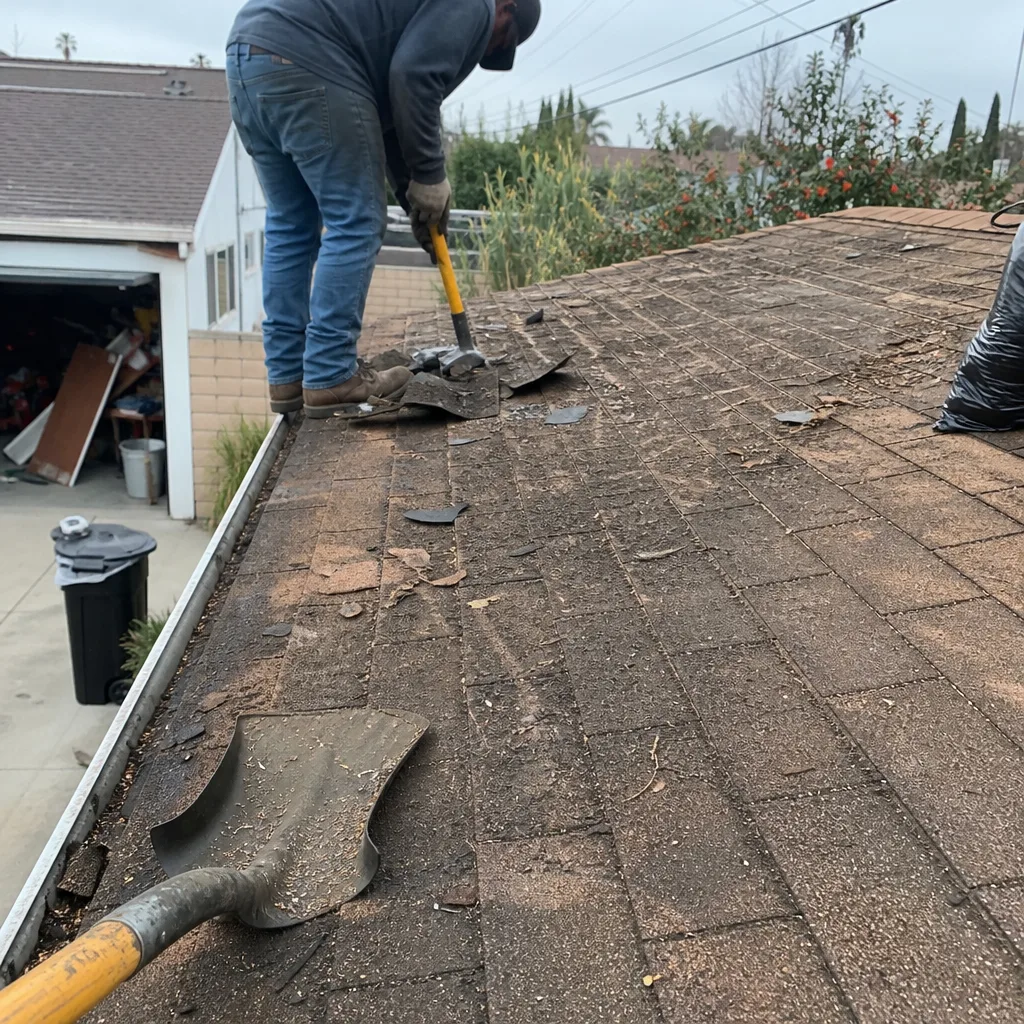 Before
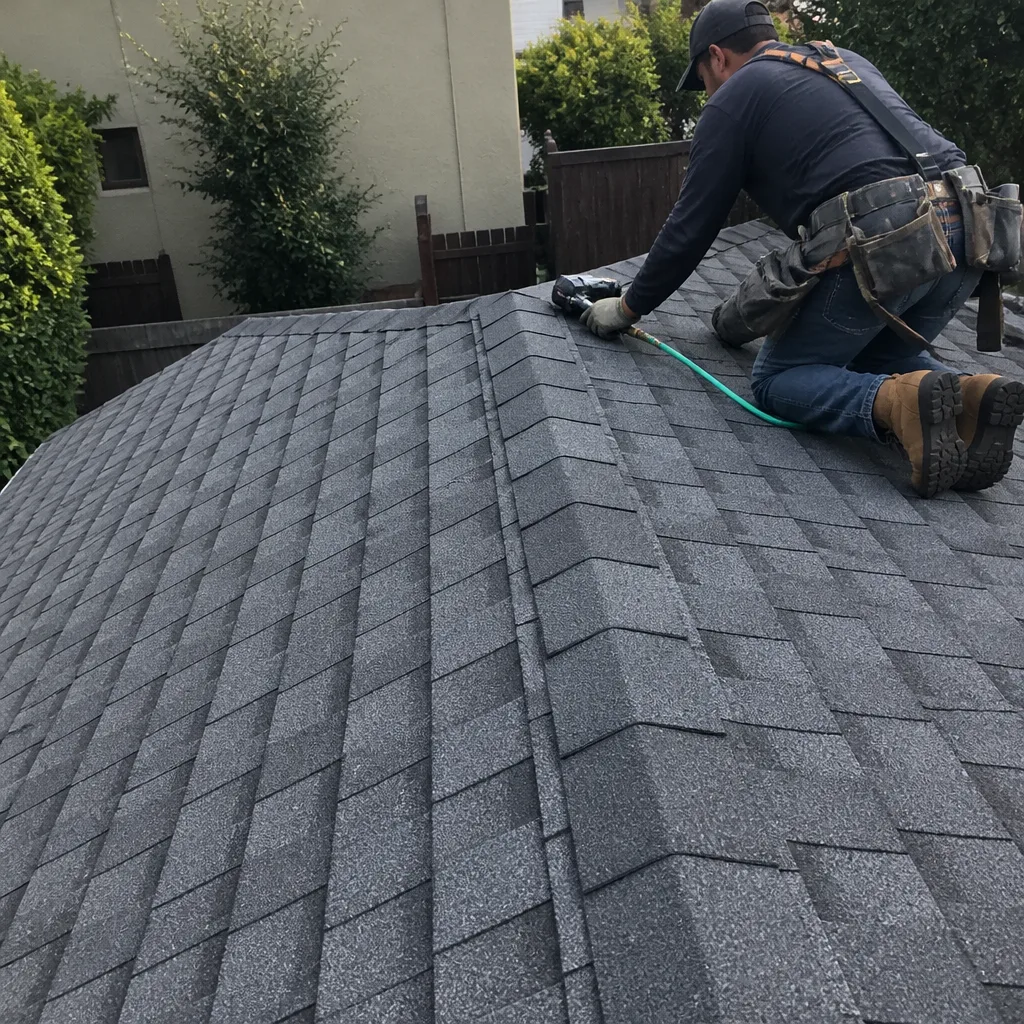 After
After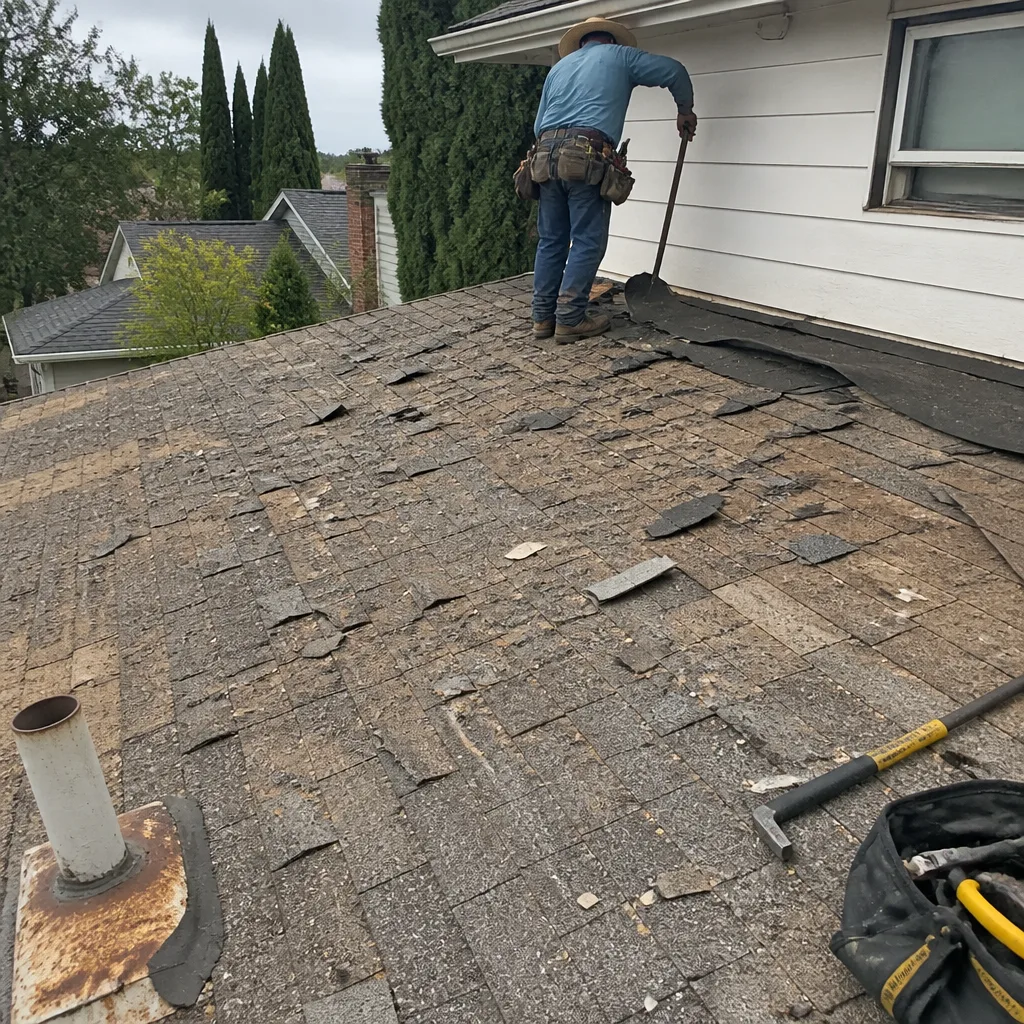 Before
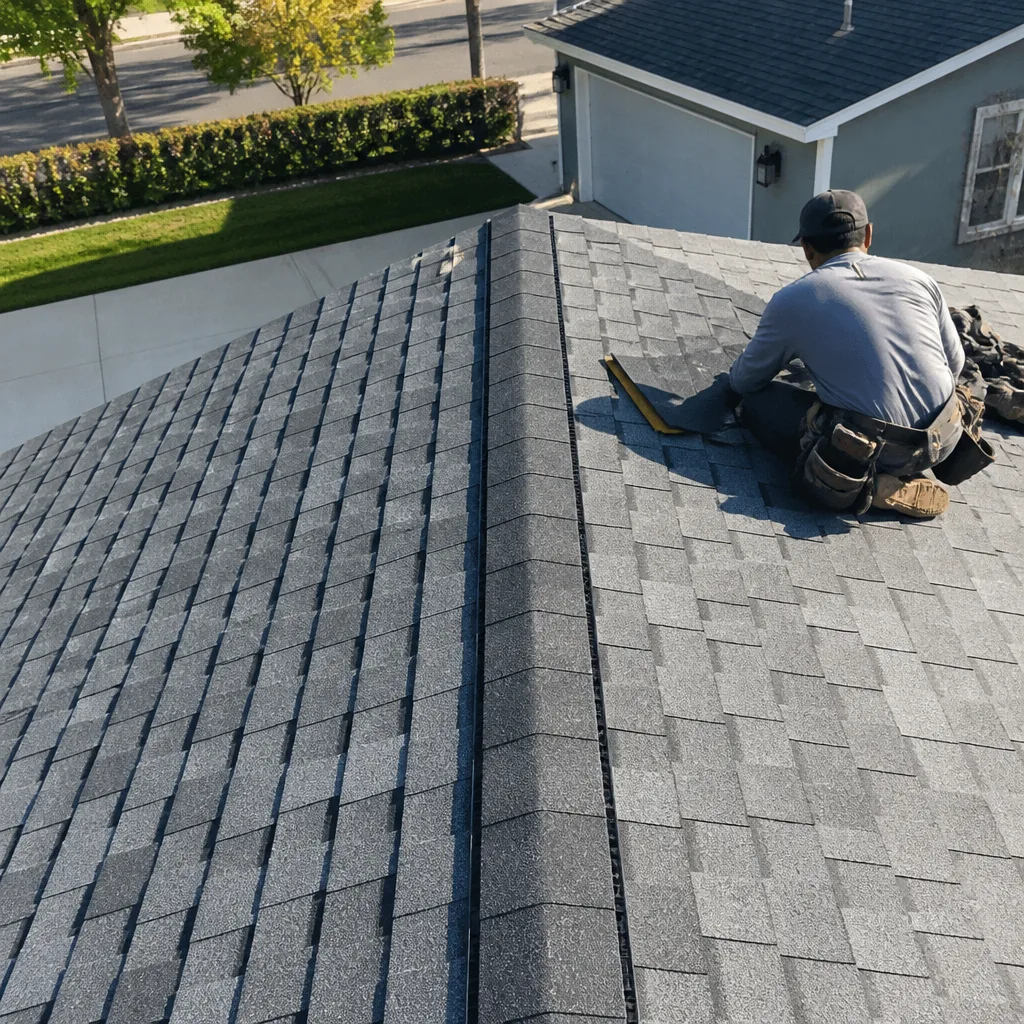 After
After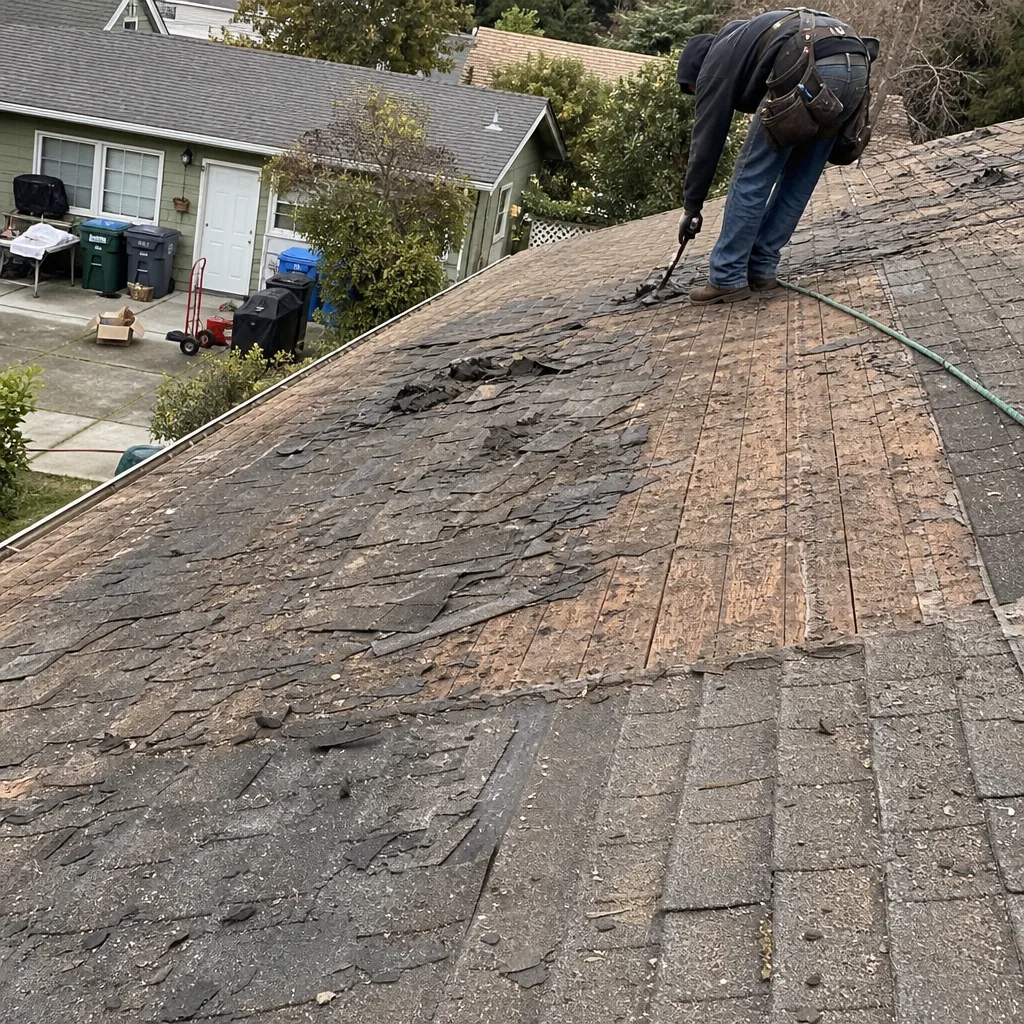 Before
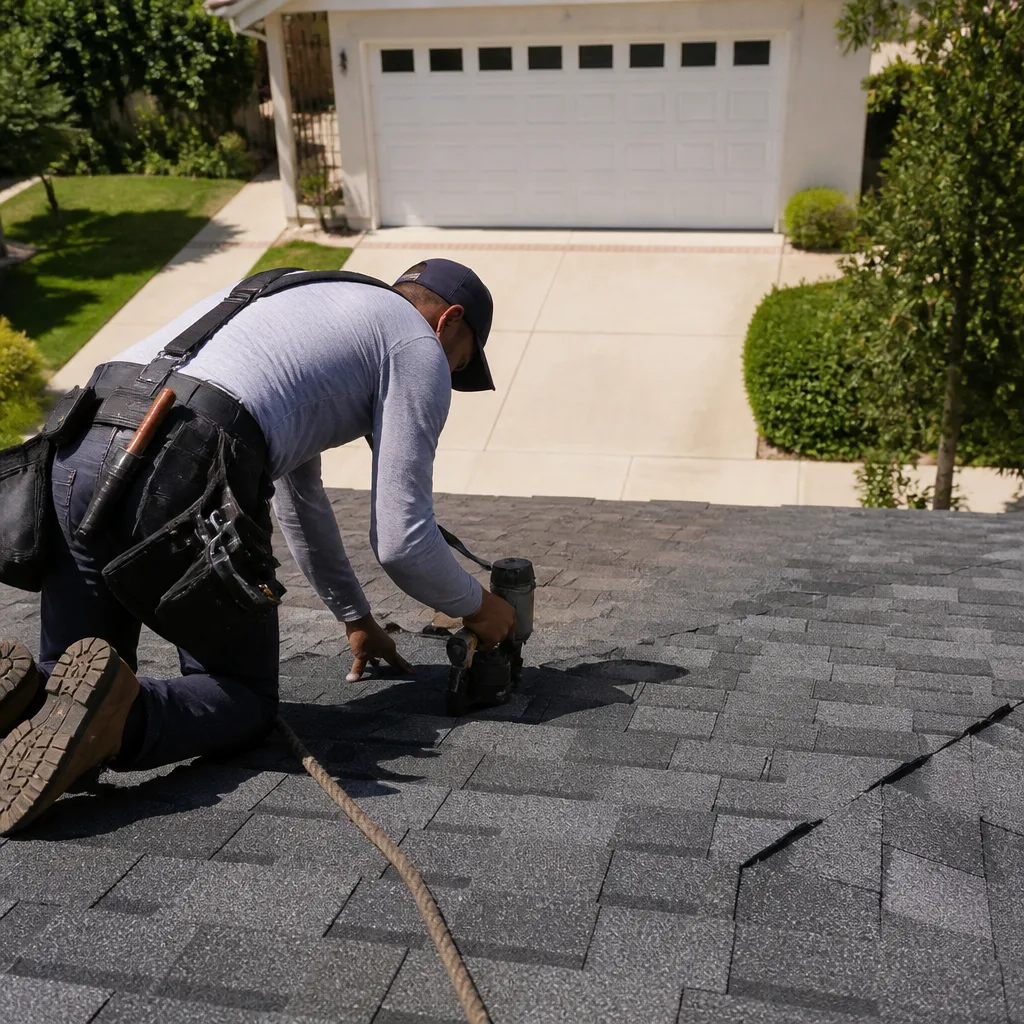 After
After