
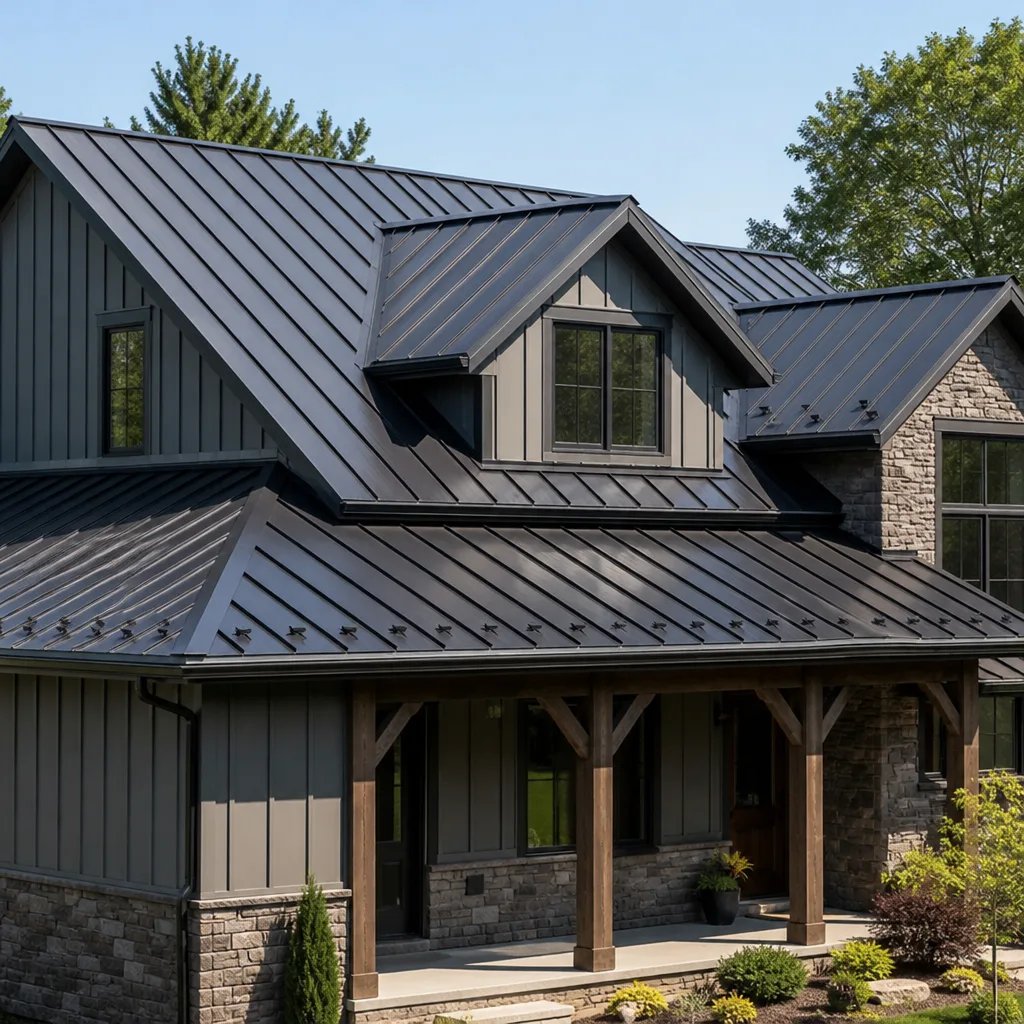
 Metal roofing
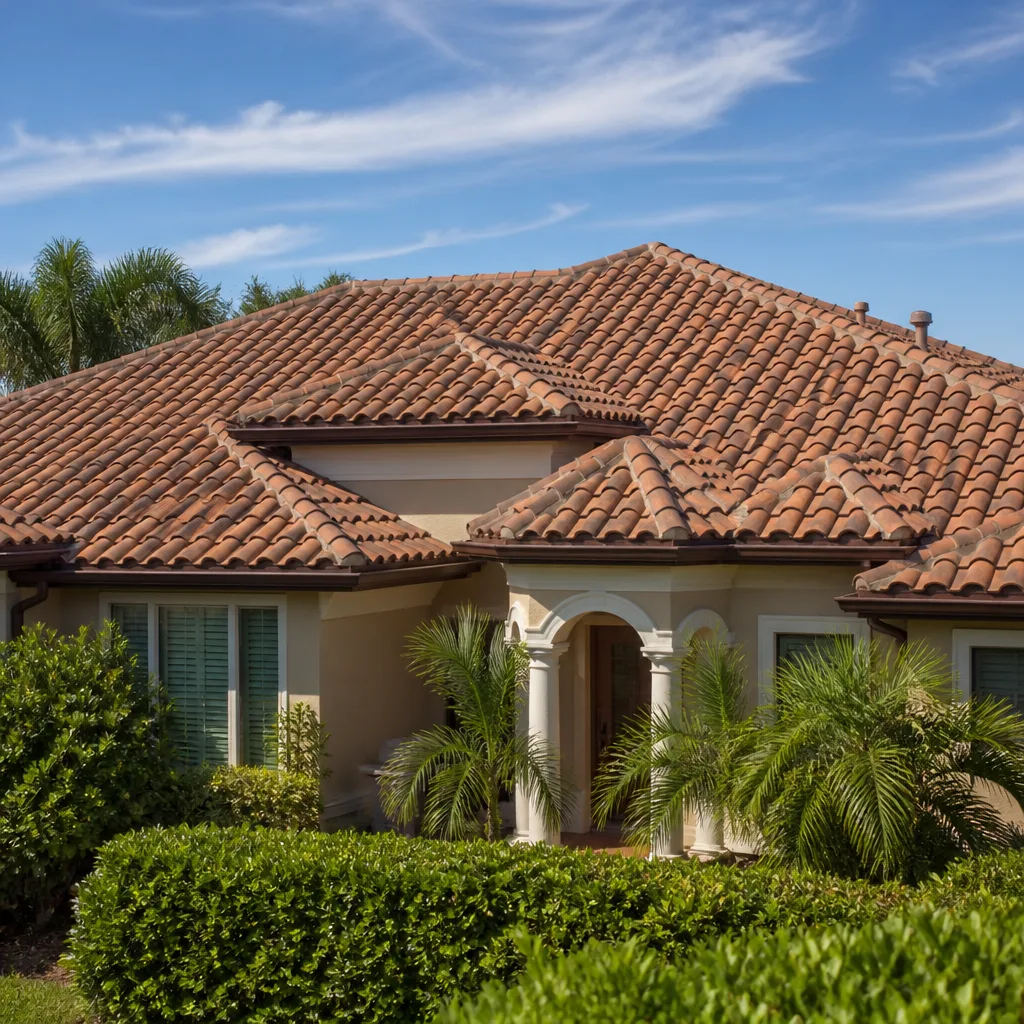 Tile roofing
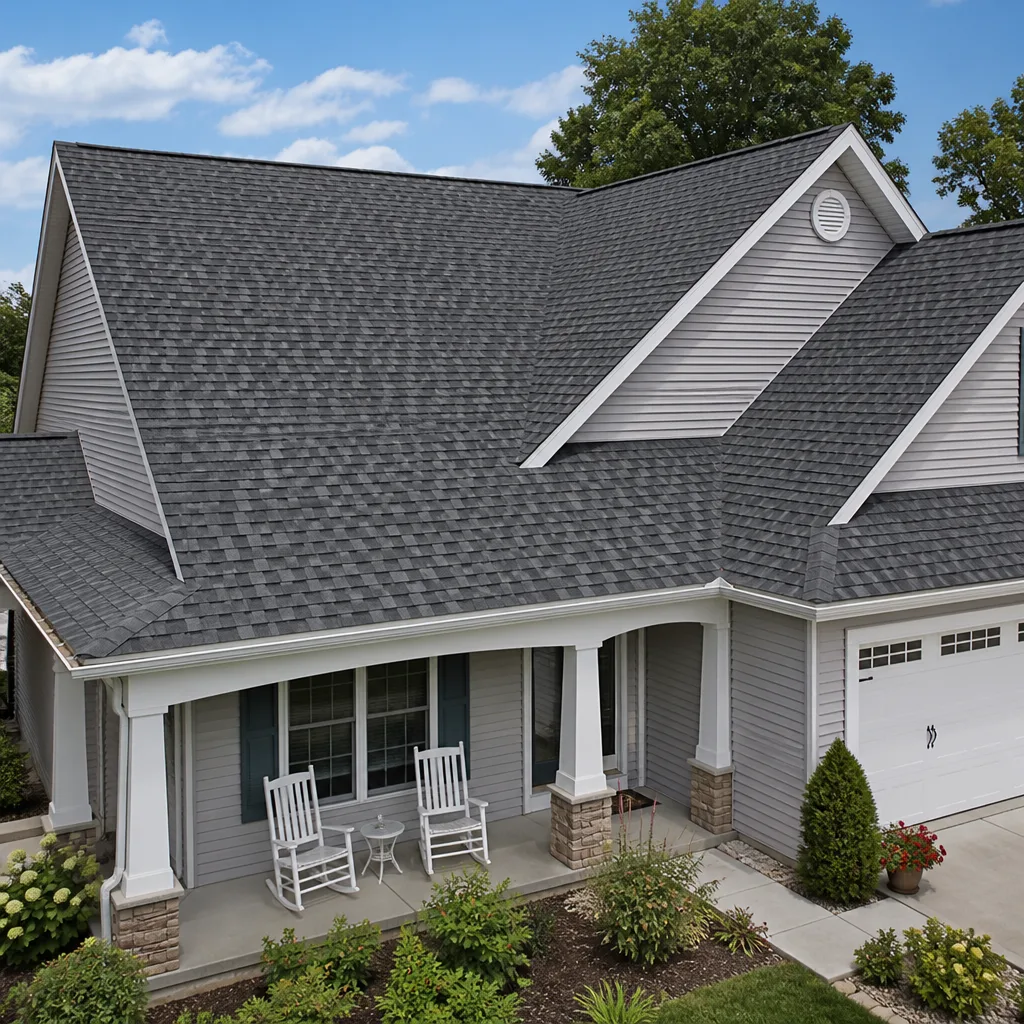 GAF
GAF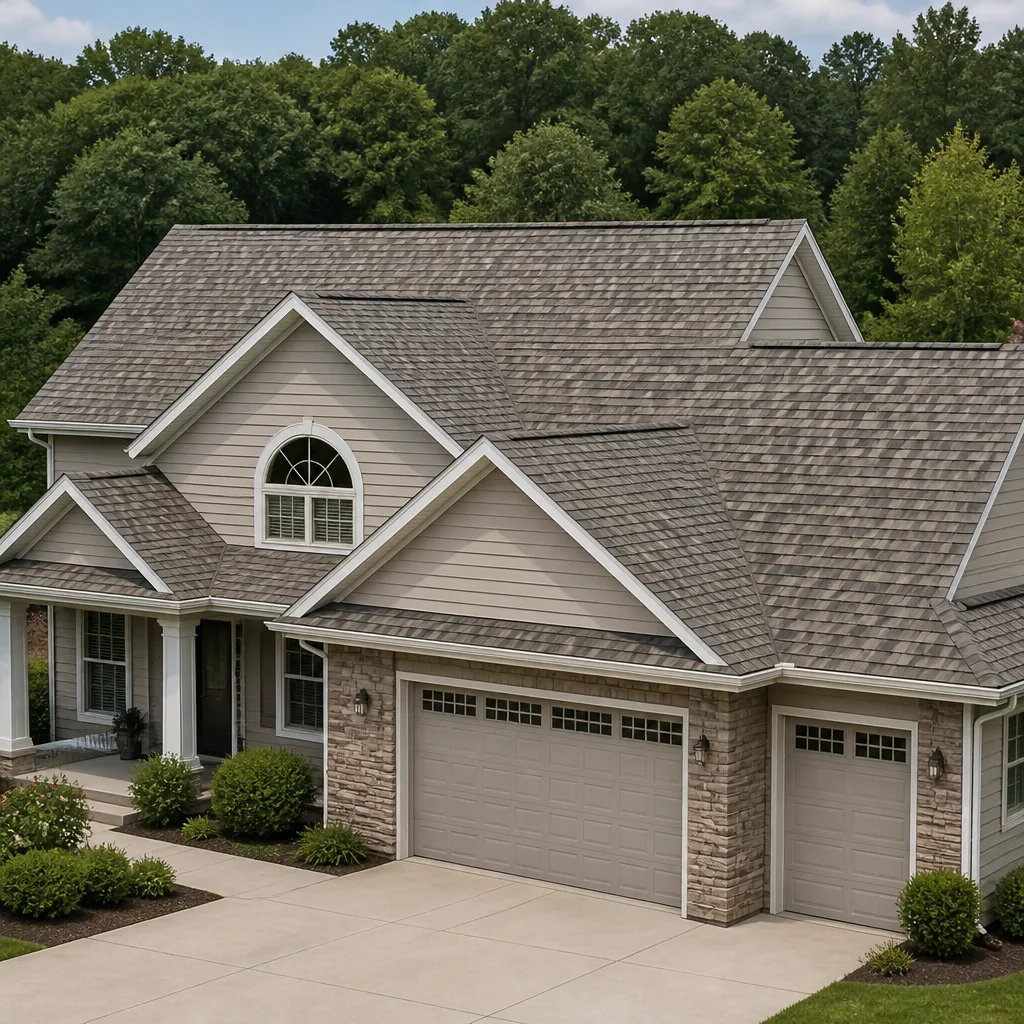 Owens Corning
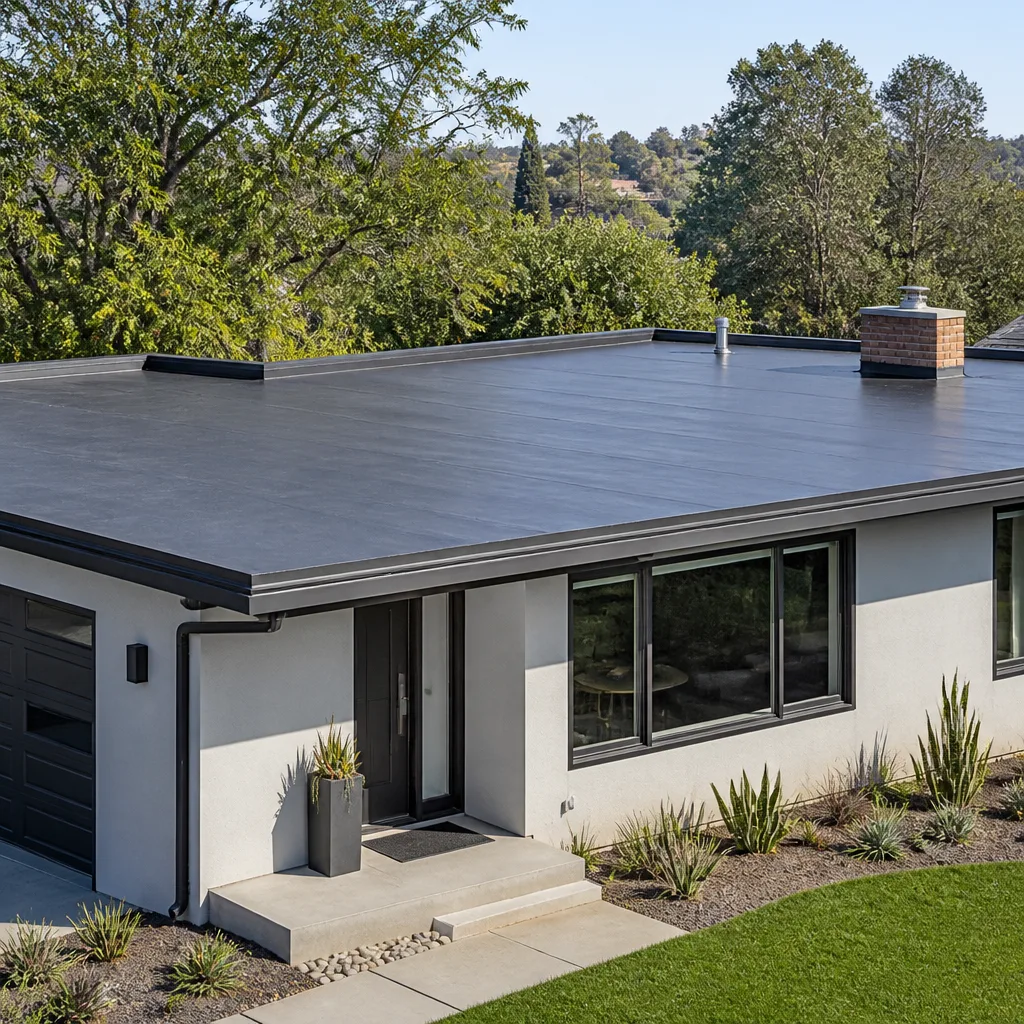 Flat & low-slope
Free roof inspection with deck photos before we talk money - GAF and Owens Corning certified installation
IKO Flashing Replacement: The Pasadena Owner’s Guide
IKO flashing replacement in Pasadena typically runs $280 – $620 installed, depending on the location on the roof and how much surrounding shingle work the repair requires. We stock IKO-compatible flashing on our trucks and can usually complete most flashing replacements the same day we diagnose the problem. Most Pasadena homeowners discover failed flashing after a rainstorm – a water stain on the ceiling, a drip near the chimney, or damp drywall around a skylight. It rarely announces itself until water has already found a way in.
Flashing is the metal (sometimes rubber or plastic) that seals the joints where your roof meets something else – a chimney, a vent pipe, a wall, a skylight, or a valley where two roof planes meet. IKO’s flashing systems are designed to work with their specific shingle profiles, and when the flashing fails, the shingles around it usually stay put. The problem is never the shingle. It’s the seal. And in Pasadena’s heat-cycles – 100° summers, cool damp winters, and those Santa Ana swings – flashing expands, contracts, and eventually cracks or pulls loose.
Here’s what you need to know as a Pasadena homeowner with an IKO roof: the flashing is the most likely point of failure long before your shingles wear out, and the fix is usually straightforward when caught early. Ignore it and a $400 flashing repair becomes a $2,400 sheathing-and-insulation job.
Which IKO Models This Applies To
Flashing compatibility with IKO roofs depends less on the shingle series and more on the type of penetration. IKO’s architectural lines – Cambridge, Dynasty, Royal Estate – and their designer series all use standard step flashing along walls, counter-flashing at chimneys, and pre-formed rubber boot flashings at plumbing stacks and vents. The flashing itself is mostly generic to the penetration type, not the shingle pattern. What varies is the metal gauge and material.
Here’s the compatibility gotcha most Pasadena homeowners don’t know: IKO’s heavier designer shingles (Royal Estate and the Dynasty line) have a thicker mat that raises the shingle profile. Standard 26-gauge galvanized step flashing still works, but we regularly see retrofits where a contractor used 30-gauge flashing on a thicker IKO shingle and the step flashing didn’t rise high enough behind the shingle course. Water rides up and over the back. We stock 24- and 26-gauge galvanized steel and 16-ounce copper step flashing – the two thicknesses that perform reliably on every IKO line installed in the San Gabriel Valley.
For OEM versus aftermarket: IKO doesn’t manufacture flashing. They specify what’s compatible. Quality aftermarket flashing from Gibraltar, Berridge, and local sheet-metal shops is what every roofer – including us – installs. The key is matching the material to the roof’s expected lifespan. A Cambridge roof in Pasadena should give 18 to 22 years. Cheap 30-gauge flashing will fail at year 10. You’d be replacing flashing on shingles that still have a decade left. We don’t stock the thin stuff for that reason.
Styles & brands we work with
Signs Your IKO Flashing Replacement Is Failing
- Water stains on the ceiling near a chimney, skylight, or wall-to-roof intersection. This is the most common first sign. The stain usually appears after a rain event – not during – because water works its way under the flashing, saturates the underlayment, and then drips inward as the roof dries out.
- Visible rust, cracks, or separated caulk on exposed metal flashing. Walk the roof perimeter from the ground if you can. If you see rust streaks running down your shingles from a chimney base or a wall joint, the flashing is already compromised. Rust means moisture is getting behind the seal.
- Flashing that has lifted or curled away from the chimney or wall plane. In Pasadena’s temperature swings, especially on the Craftsman homes in Madison Heights and Orange Heights, older flashing held only by roofing cement eventually works loose. The cement dries, cracks, and the flashing pulls up. You can sometimes spot this from the ground with binoculars.
- Granules from your IKO shingles clogging valley flashing or gutters. Granule loss is normal over decades, but a sudden concentration around flashing seams often means water is channeling under the metal and eroding the shingle surface above it. If your valleys show bare asphalt or a trail of granules, water is moving where it shouldn’t be.
- Mold, mildew, or peeling paint on interior walls where the roof meets a wall. Kneewalls and dormers in Pasadena’s older homes get this more than anything else. Moisture seeps behind the step flashing, wicks into the stud bay, and you see it as peeling paint or a musty smell long before there’s a visible drip.
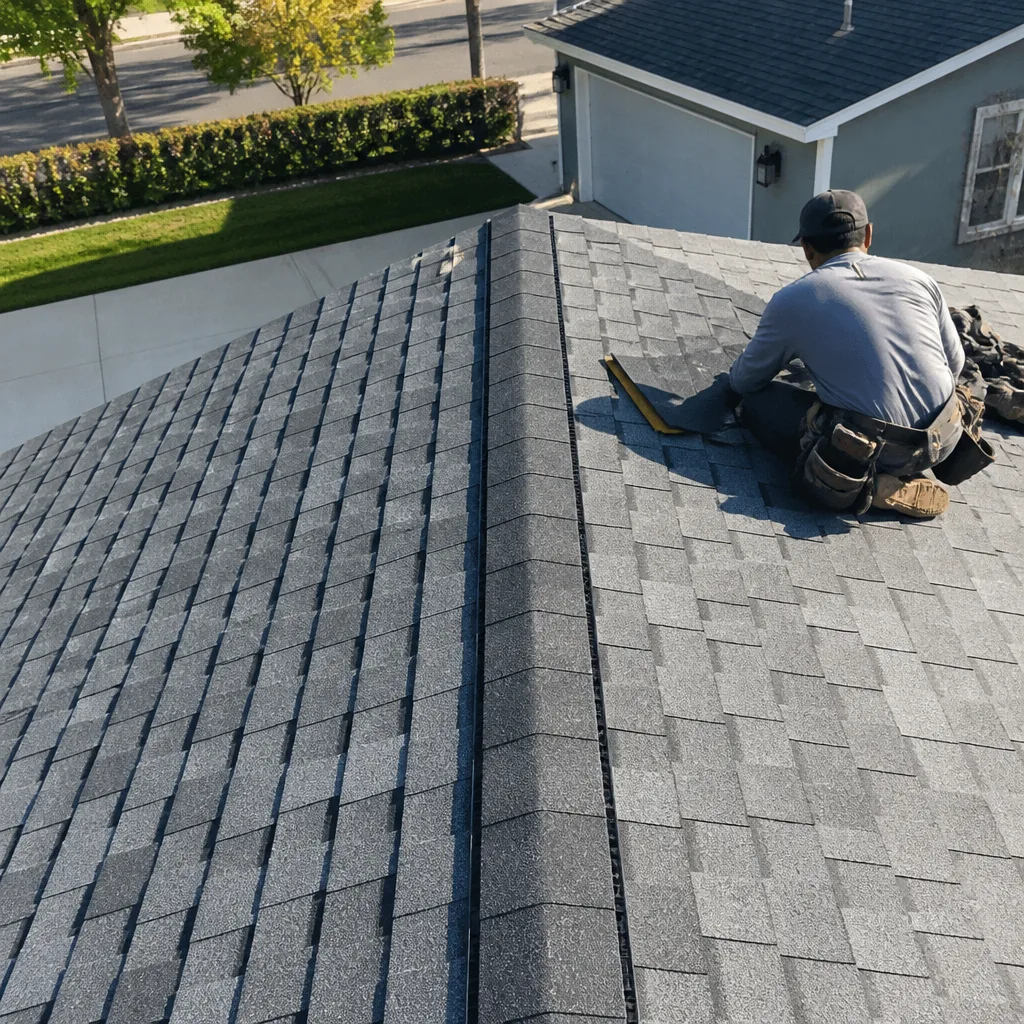
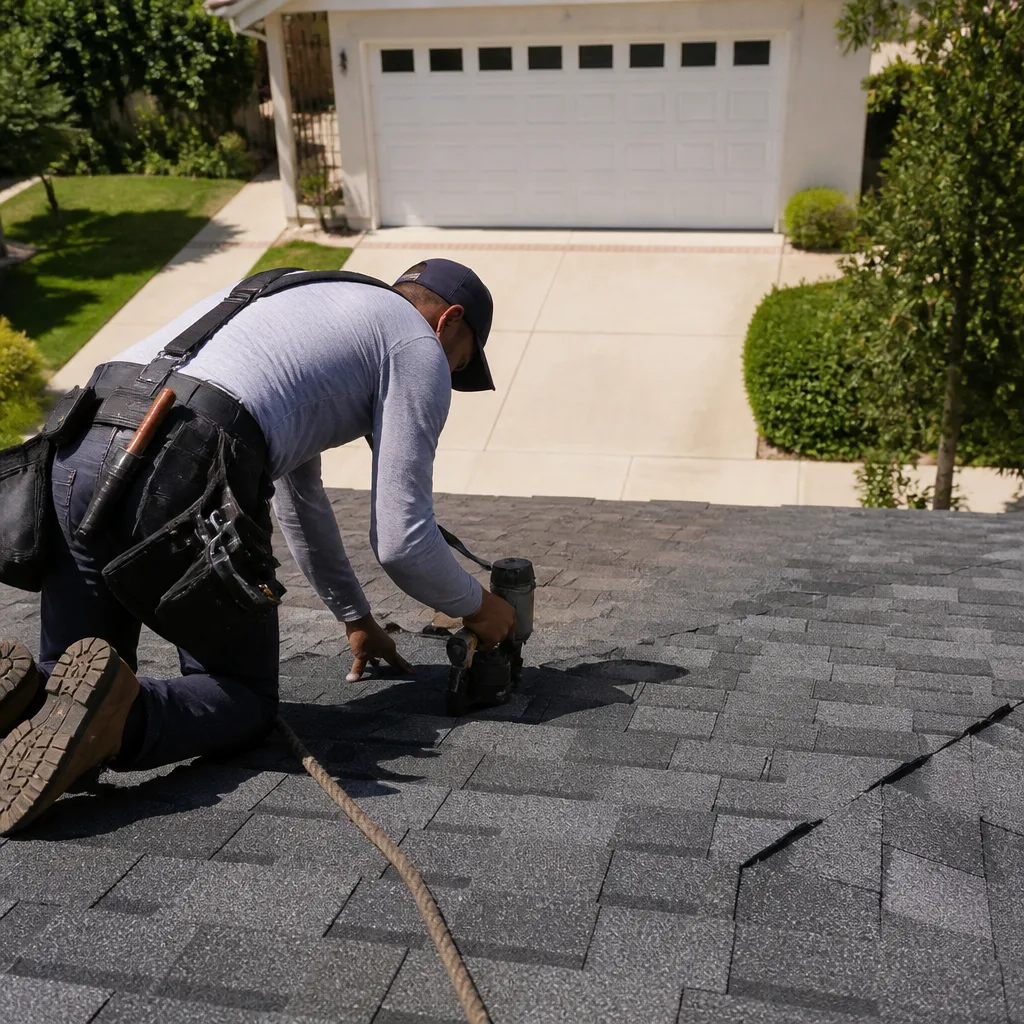
See the difference
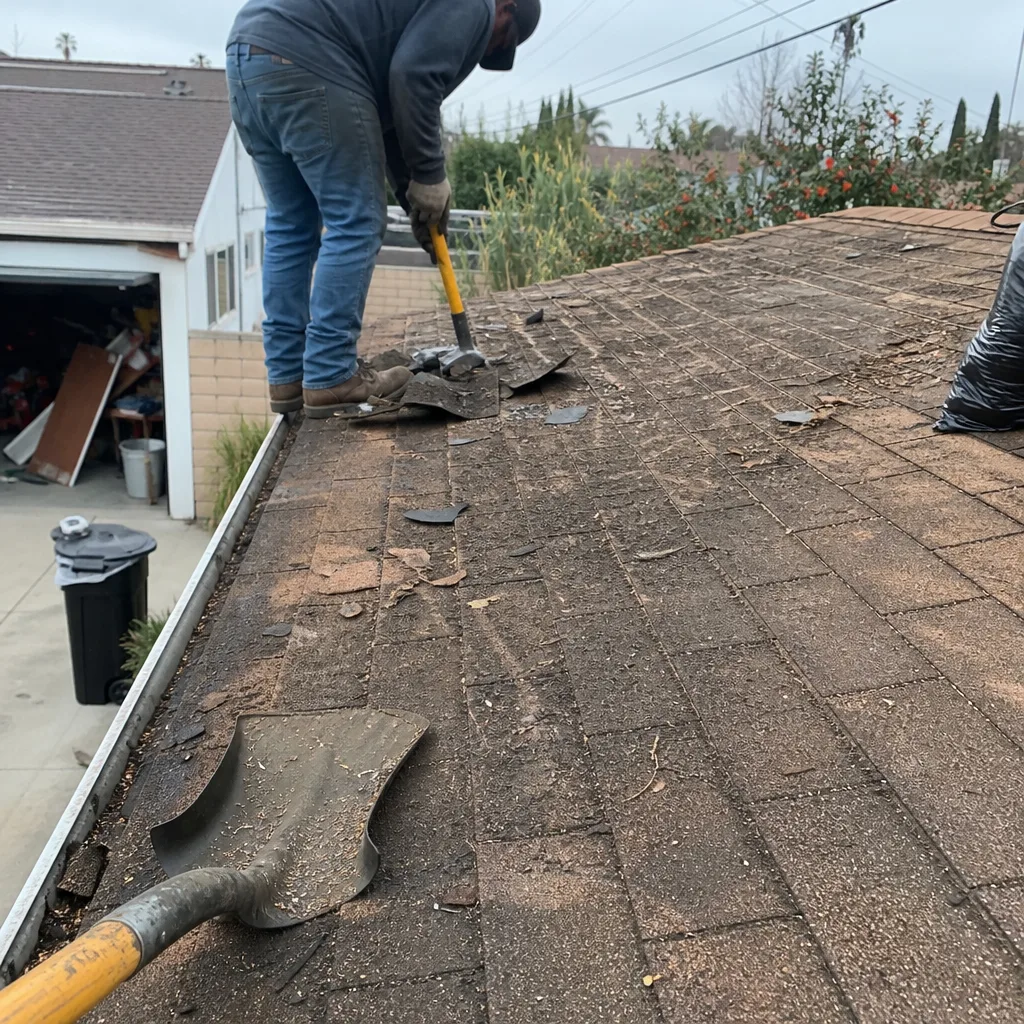 Before
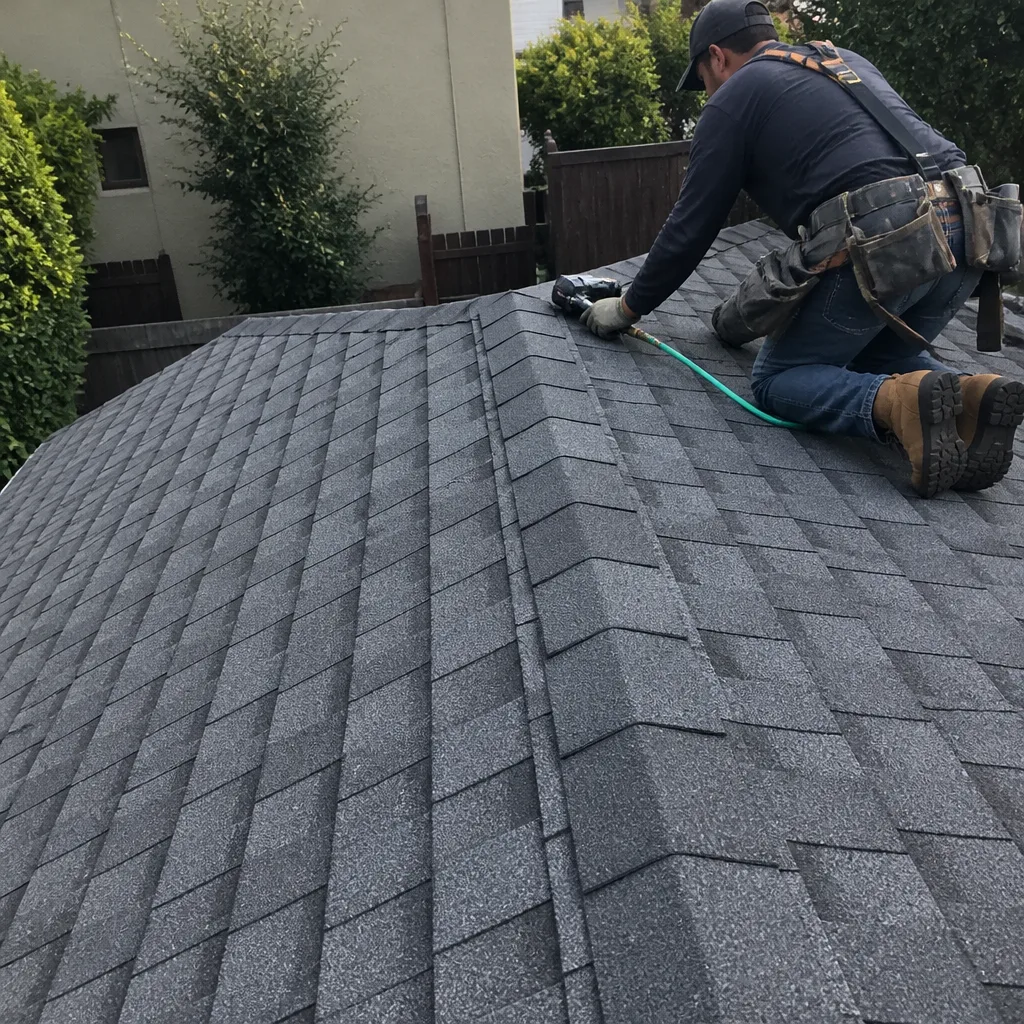 After
After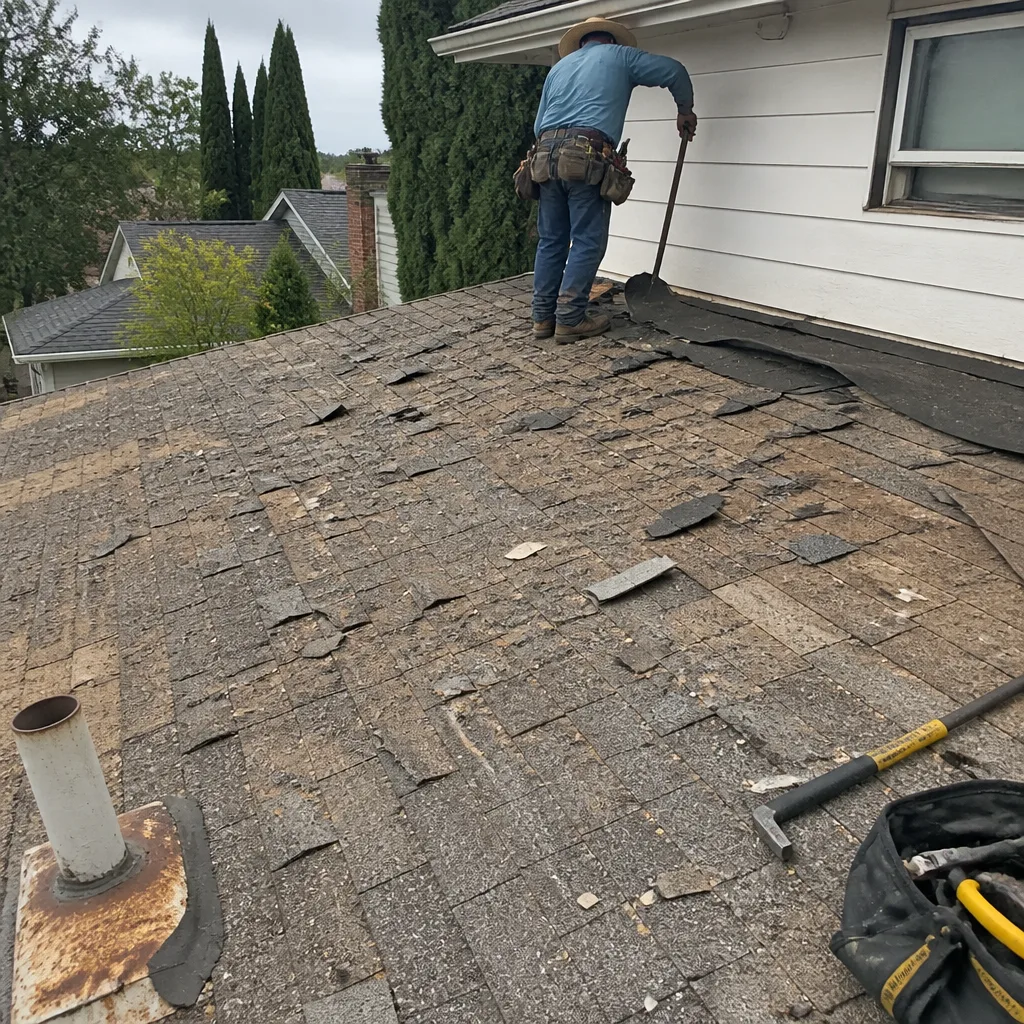 Before
 After
After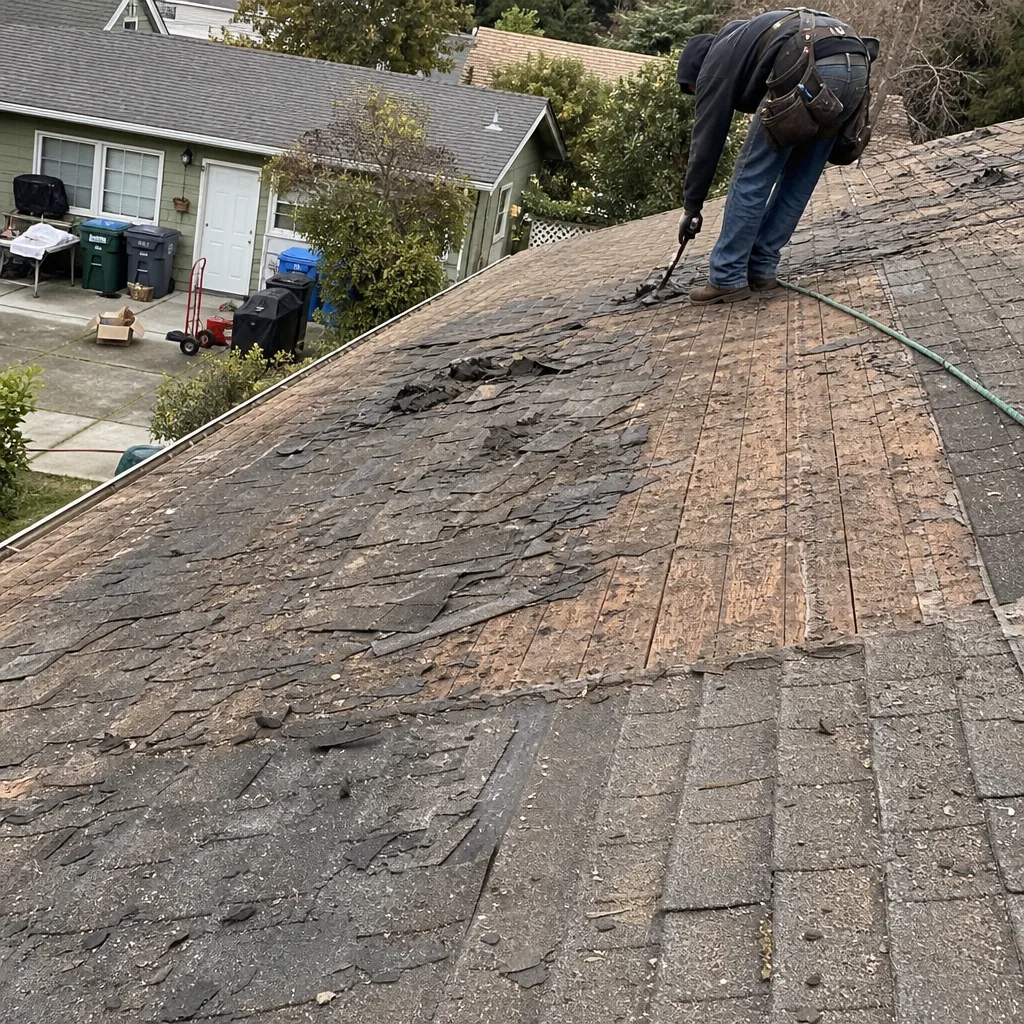 Before
 After
AfterReplacement Cost & What’s Included
In Pasadena, IKO flashing replacement on a standard chimney or wall-to-roof intersection runs $280 – $620, including parts and labor. Step flashing replacement along a wall or dormer typically falls in the $350 – $550 range. Pipe boot flashing replacement is the cheapest fix on the list – usually $180 – $280 when it’s a simple pull-and-swap. Skylight flashing is the most expensive, often $450 – $900 because the skylight has to be unseated, re-flashed, and re-set properly.
What drives the price? Access. A one-story ranch with a walkable 4/12 pitch costs less than a two-story Pasadena craftsman with a 10/12 roof that needs safety stanchions and extra crew time. Age of the surrounding shingles matters too – if the shingles around the flashing are brittle, we may need to replace a course of them to get a watertight seal. We tell you all of this before work starts. The written quote we give you is the price you pay. No change orders, no surprises at the end.
Every flashing replacement from Crestview is covered by our 365-Day Done Right Promise. If the repair fails within a year, we come back and fix it at no charge – free second visit, no negotiation. That’s in writing, included with every job.
DIY or Call Us?
You can safely check a few things from the ground: rust streaks, lifted flashing, missing pipe boots, or caulk that’s visibly cracked and peeling. What you shouldn’t do is get on a ladder and try to remove or re-seal flashing yourself. Here’s why: flashing that’s failing is usually failing at the fastener or seal point underneath the shingle course. Re-caulking the top edge from a ladder might slow a leak for a few weeks, but it does nothing for the water already getting in below. Meanwhile, you’re on an extension ladder, leaning over the roof edge, working with metal that has sharp corners. One wrong step and a $400 repair becomes a hospital bill.
There’s also the warranty factor. Improper flashing repairs – even well-intentioned ones – can void the remaining life of your IKO shingle warranty. If the underlayment isn’t lapped correctly, or the step flashing doesn’t get re-seated under the shingle above, you create a new leak where there wasn’t one. We’ve fixed plenty of homeowner patch jobs. The pattern is always the same: the first fix worked for a season, then the rains came back and the ceiling stain came with them.
The honest answer? Leave the removal and re-sealing to someone who does it every week. Call (626) 389-1956 and we’ll come inspect it – free estimate, and you’ll know exactly what it costs before any work starts.
FAQs
Quality IKO-compatible flashing installed correctly lasts 20 – 30 years, roughly matching the lifespan of the shingles around it. The Pasadena heat factor – prolonged periods above 95° across Highland Park and the Arroyo foothills – causes galvanized flashing to expand and contract more than it would in coastal zones. Cheap flashing can fail in as little as 8 to 12 years here. The flashing installed properly with the right gauge is the difference between two decades and one.
Sometimes, yes. Small cracks in counter-flashing can be patched with the right roofing cement if the surrounding material is still structurally sound. But most flashing we see in Pasadena has reached the point of replacement by the time the homeowner notices – the rust or the lift is too extensive for a patch. We’ll tell you honestly which one you need. We don’t replace what can be repaired, and we don’t repair what’s going to leak again in six months. Call (626) 389-1956 and we’ll assess what you have.
Most standard flashing replacements on an IKO roof take 1 to 3 hours, depending on the penetration type and roof access. A pipe boot swap can be done in under an hour. A chimney or skylight re-flash may take half a day. The surrounding work – removing courses of shingles, re-sealing, setting the new flashing – adds time on steeper roofs. We’ll give you a clear time estimate when you book, and we’ll text you a live arrival time before we show up.
Yes. Our Pasadena crews keep standard 24- and 26-gauge galvanized step flashing, pipe boot flashing, valley metal, and wall-to-roof transition flashing on-hand. For copper or specialty profiles, we order direct from our sheet-metal suppliers and typically have materials within one to two business days. Most jobs get done same-day with what’s already on the truck.
If you suspect your IKO flashing is failing, or you’ve already spotted the water stain and want a straight answer on what it’ll cost – call (626) 389-1956. We’ll come out, inspect the problem, and put a written price in your hand before any work begins. Get it in writing – then get it done right.
Written by Dylan Pace, Owner, Crestview Roofing Co Pasadena at Crestview Roofing Co Pasadena, serving Pasadena and nearby areas.