
Last updated October 17, 2026
 Metal roofing
 Tile roofing
 GAF
GAF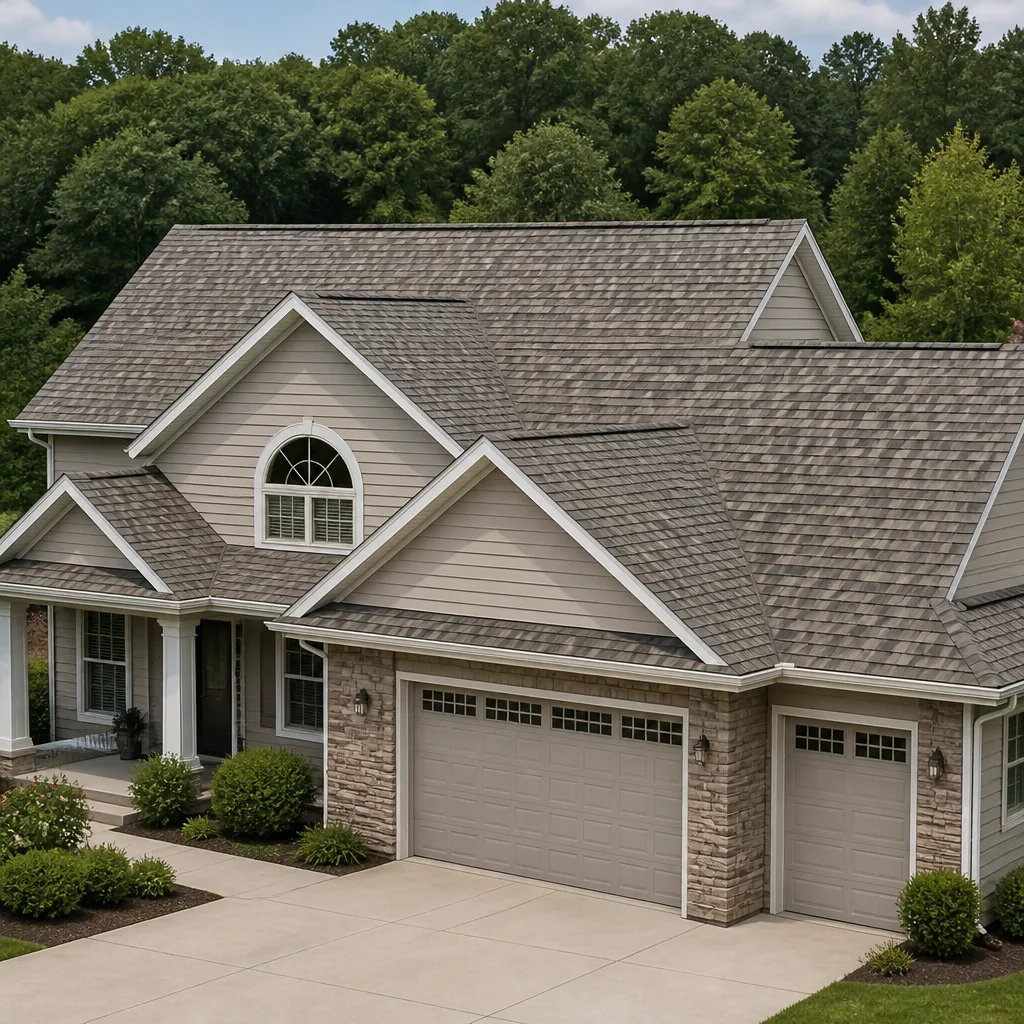 Owens Corning
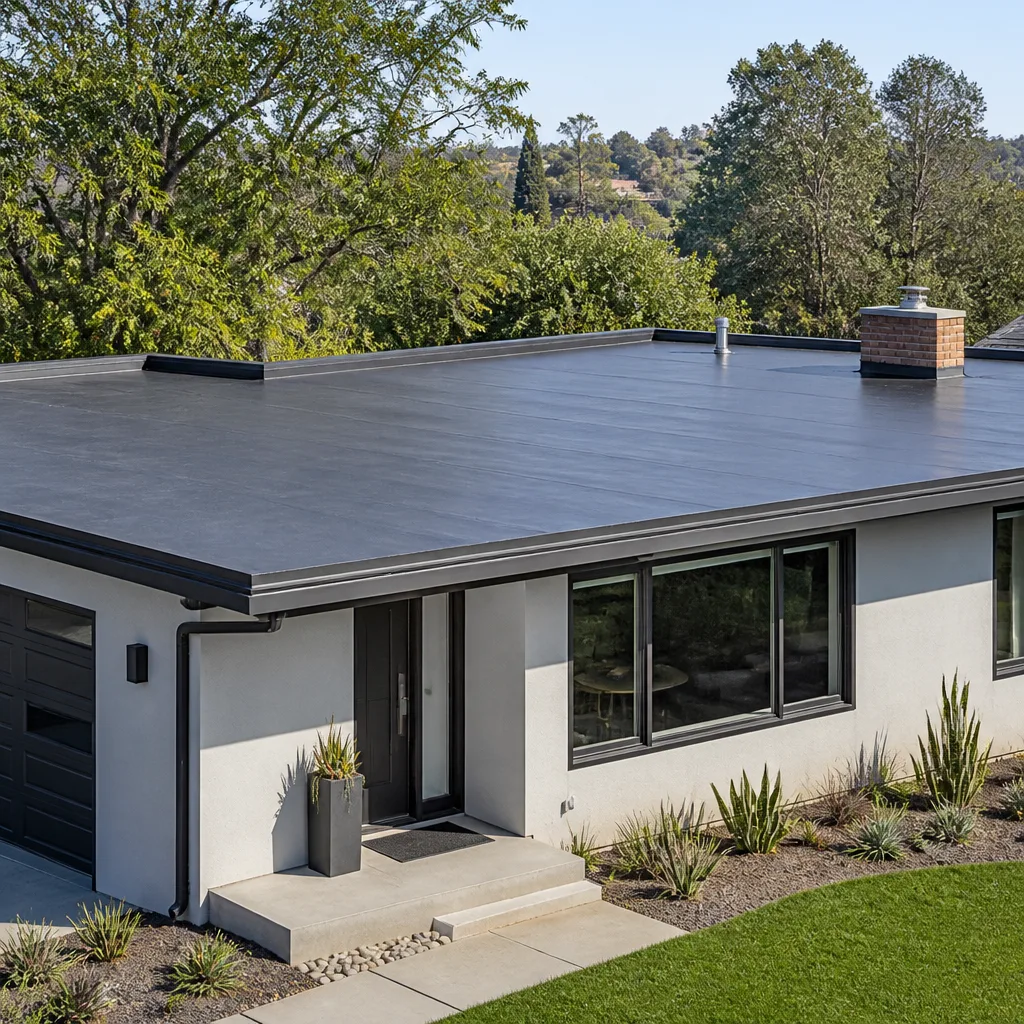 Flat & low-slope
Free roof inspection with deck photos before we talk money - GAF and Owens Corning certified installation
The Complete Guide to Roofing in Pasadena
Pasadena has more than 1,200 properties sitting inside historic or semi-historic overlay zones. That means the roofing material your neighbor two streets over installed last spring could be a code violation on your block. Most roofing guides treat Pasadena like any other Southern California city. That’s a mistake. This guide maps the three forces that actually shape roofing decisions here: the city’s historic district rules, a climate that swings between coastal marine layer and wildfire-adjacent heat, and a contractor culture where verbal quotes are still the norm. By the end, you’ll know exactly what your roof needs, what it should cost, and how to verify the work was done right.
Quick Answer
Roofing in Pasadena requires navigating three overlapping constraints: historic district overlay rules that restrict materials and colors on roughly 1,200 properties, a climate that combines marine moisture with inland heat and Santa Ana wind exposure, and a local market where written quotes are rare. A standard composition shingle roof in Pasadena runs $18,000 to $32,000 for a 1,500-square-foot home, while clay tile starts around $38,000 and can exceed $60,000. Before choosing any material, check your property’s historic status, pull the permit history, and get a written, itemized quote.
Styles & brands we work with
Table of Contents
- Pasadena’s Historic Districts and What They Mean for Your Roof
- Why Pasadena’s Climate Stresses Roofs Differently Than Coastal LA
- The Real Lifespans of Pasadena’s Four Most Common Roof Types
- Written Quotes vs. Verbal Ballparks: Why the Gap Averages Thousands
- How to Read a Pasadena Roofing Permit Record
- What Roofing Actually Costs in Pasadena in 2026
- Comparing Materials: Composition, Clay, Concrete, and Flat Roofs
- How to Choose a Pasadena Roofing Contractor
Pasadena’s Historic Districts and What They Mean for Your Roof
Before you ever pick a shingle color, you need to know whether your property falls within one of Pasadena’s designated historic districts. The city has 19 landmark districts and dozens of smaller overlay zones. The ones that trip up homeowners most often are Bungalow Heaven, West Polytechnic, the Civic Center district, and sections of Old Pasadena. Within these zones, the city’s Design and Historic Preservation Department reviews exterior changes, including roofing materials and colors, before a permit is issued.
What does that mean in practice? If your home sits in Bungalow Heaven, a Craftsman-era district, the city typically requires wood shake or an approved composition product that replicates wood’s texture and color range. A bright architectural shingle in driftwood gray might sail through review in Hastings Ranch, but the same shingle could be rejected two miles away in West Polytechnic. Clay tile, common across Pasadena’s Spanish Colonial and Mediterranean Revival homes, generally requires matching the existing tile profile and color family if you’re repairing or replacing a portion.
The review process is not a rubber stamp. We’ve seen homeowners order 30 squares of material only to discover the Design Commission wants a different color. The solution is simple: check your address against the city’s Historic Property Search Tool before you get quotes. If you’re in a district, factor two to four weeks into your timeline for design review. A contractor who does not flag this on the first visit is guessing, and guessing gets expensive.
Steps to Check Your Property’s Historic Status
- Go to the City of Pasadena Planning Department’s online map portal.
- Enter your address and toggle on the “Overlay Zones” or “Landmark Districts” layer.
- If your parcel shows a designation, note the specific district name.
- Download the district’s design guidelines PDF. Each district has its own material and color standards.
- Share that PDF with any contractor you’re considering. If they have never read it, they are not the right fit for your project.
This step takes 15 minutes and saves thousands in re-ordered materials or denied permits.
Why Pasadena’s Climate Stresses Roofs Differently Than Coastal LA
Pasadena sits 14 miles inland, but the climate gap between here and Santa Monica might as well be 140 miles. Morning marine layer reaches the foothills on many days, leaving roofs damp at dawn. By 2 p.m., summer temperatures routinely pass 90°F, and during heat waves the surface of a dark composition shingle can exceed 150°F. That daily thermal swing, repeated for months, expands and contracts roofing materials at different rates depending on their density, which is how fasteners loosen and seams open on roofs that look fine from the curb.
Then comes the fire season. Santa Ana winds, typically September through December, push hot, dry air through the San Gabriel foothills at 40 to 60 miles per hour, with stronger gusts in narrow canyons. For roofs, wind-driven embers are a bigger threat than direct flame. Embers land in gaps around flashing, settle into valleys, and ignite accumulated leaf litter. This is why Cal Fire and the Pasadena Fire Department emphasize Class A-rated roofing assemblies, which most composition, tile, and metal systems earn, but only when installed with sealed edges and intact flashing.
The third stressor is the freeze-thaw cycle at the upper elevations. Neighborhoods like Hastings Ranch, Upper Linda Vista, and the San Rafael Hills drop near or below freezing on clear winter nights. Water that seeps into micro-cracks in tile or mortar joints freezes, expands, and widens those cracks. Over a decade, this creates the chipped tile edges and hairline fractures we regularly repair. A roof spec built for coastal temperatures does not account for this. Your contractor should.
The Real Lifespans of Pasadena’s Four Most Common Roof Types
Manufacturer warranty cards are optimistic. They test materials in controlled conditions, not on a south-facing Pasadena roof with full sun exposure, Santa Ana wind abrasion, and the occasional freeze. Based on what we replace and repair across the city, here are the real-world lifespans for the four most common Pasadena roof systems.
| Roof Type | Typical Pasadena Lifespan | Primary Failure Mode | Cost Range (1,500 sq ft home) |
|---|---|---|---|
| Composition Shingle | 18-25 years | Granule loss, curling, nail pops from thermal cycling | $18,000-$32,000 |
| Concrete Tile | 40-60 years | Underlayment failure, tile cracking at freeze points | $32,000-$48,000 |
| Clay Tile | 50-75 years | Broken tiles from impact, underlayment degradation | $38,000-$65,000 |
| Flat/Low-Slope Built-Up | 15-25 years | Ponding water, membrane seam separation, UV degradation | $12,000-$22,000 |
Composition shingles, the most common roof in Pasadena’s mid-century neighborhoods like Chapman Woods and the San Rafael area, fail gradually. You’ll see granule buildup in gutters, then curling at the eaves, then exposed felt. The failures accelerate after year 15. Concrete tile lasts longer but the underlayment underneath, the waterproof membrane between the tile and deck, often breaks down around year 25 to 30. That means the tile looks fine while the actual water barrier is compromised.
Clay tile is the longest-lived material in Pasadena, and the standard on Spanish Revival homes across the city. The tiles themselves can last 75 years or more, but they crack under foot traffic and impact. We replace individual tiles constantly; the bigger expense is a full re-roof where the old underlayment must be stripped and replaced.
Flat and low-slope roofs are common on Pasadena’s mid-century modern homes and commercial conversions, particularly in the Arroyo Seco corridor and parts of Linda Vista. They fail fastest of all four, usually due to ponding water that sits after winter rain. A flat roof with a 1/4-inch-per-foot slope drains slowly; one with a 1/8-inch slope may hold water for days, and standing water destroys built-up roofing and torch-down membranes faster than sun exposure.
Written Quotes vs. Verbal Ballparks: Why the Gap Averages Thousands
Here is a scenario we hear at least once a month. A homeowner in Altadena or northeast Pasadena gets a verbal quote for a roof replacement: “$22,000, give or take.” They sign something informal. The crew arrives, tears off the old roof, and discovers rotted decking. The final invoice is $29,000. The homeowner is furious, but the contractor points to a contract clause that allows for “unforeseen conditions.”
That gap, $7,000 in this case, is what a written, itemized quote is designed to prevent. A real roofing quote in Pasadena should list every cost line by line: tear-off and disposal, decking replacement per sheet (with a stated price if additional sheets are needed), underlayment type and brand, shingle or tile type and brand, flashing replacement, valley treatment, ridge venting, permit fees, and warranty terms. If a quote has one line that says “roof replacement: $22,000,” it is not a quote. It is a guess with a dollar sign.
The Relay Visibility Guarantee, which governs every job at Crestview Roofing Co Pasadena home, exists specifically because this verbal-quote culture is so entrenched here. Written price before any work starts. The number on the page is the number on the invoice. No change orders because a deck sheet “looked bad” once the tear-off happened. When we quote a roof in Pasadena, we include the per-sheet decking replacement cost in the original document so you know exactly what any rot discovery will add, before the first shingle is pulled.
How to Read a Pasadena Roofing Permit Record
Before you bought your Pasadena home, the seller may have disclosed a roof replacement “in 2018.” The permit record tells you what actually happened. Pasadena’s Building & Safety Division maintains public permit records that show whether the work was permitted at all, what scope was approved, and whether the final inspection passed. This information is accessible online, and reading it correctly takes about ten minutes.
- Go to the City of Pasadena’s Citizen Access Portal or Permit Search page.
- Search by your address. Look for permits with a description containing “reroof,” “roof,” or “re-roof.”
- Open the permit. You want to see the status “Finaled” or “Complete.” If the status says “Issued” but not “Finaled,” the project was never closed to completion with an inspection.
- Look at the work description. It should state the material type, the number of squares, and the roof assembly (for example, “Class A composition shingle, 24 sq, 1/2-in OSB decking replacement as needed”).
- Check the inspection history. A final structural inspection and a final building inspection should both be listed. If only one appears, ask why.
An unpermitted roof is more common in Pasadena than most buyers realize, particularly on homes that changed hands before 2010 when enforcement was looser. If the record shows no permit for a roof that is clearly not original, walk into the scenario with eyes open. You may need to budget for a re-roof sooner than the listing agent implied, and your insurance carrier may ask about the roof’s installation history before renewing your policy.
What Roofing Actually Costs in Pasadena in 2026
Roof pricing in Pasadena runs higher than the Inland Empire and slightly above Long Beach, driven by three local factors: the city’s permit and inspection fees, disposal costs for old materials, and the labor pool. Pasadena requires a city-issued permit for any roof replacement and most repairs beyond a certain square footage. The permit fee for a standard re-roof typically ranges from $300 to $600 depending on the project valuation. That is a real cost your contractor should be passing through, not hiding.
Here is a realistic breakdown for a 1,500-square-foot composition shingle roof in Pasadena with existing decking in sound condition:
- Tear-off and disposal: $2,500-$4,000
- Decking inspection and minor repairs: $800-$1,500
- Underlayment (synthetic): $1,200-$1,800
- Composition shingles (25-30 squares, mid-range architectural): $6,000-$9,000
- Flashing replacement (chimney, valleys, vents, pipe boots): $1,500-$2,500
- Gutter apron and drip edge: $600-$1,000
- Permit and city fees: $300-$600
- Labor: $5,000-$8,000
- Total: $17,900-$28,400
Tile roofs in Pasadena carry a significant premium because the tiles themselves cost more and the labor is slower. Concrete tile pours in at $32,000 to $48,000 for the same home. Clay tile starts around $38,000, and on a multi-story Spanish Revival with steep pitches and custom flashing, $65,000 is not unusual. Flat roofs are cheaper at the front end, $12,000 to $22,000 for a built-up or modified bitumen system, but they fail sooner, so the 30-year cost often exceeds a composition roof.
When you get a quote, ask for the per-square price. In Pasadena, composition runs $600 to $950 per square (a square is 100 square feet) installed. If a quote comes in below $500 per square, start asking hard questions about what is being omitted: underlayment quality, flashing replacement, or the city permit.
Comparing Materials: Composition, Clay, Concrete, and Flat Roofs
Your Pasadena roof material decision hinges on four variables: historic district rules, budget horizon (how long you plan to own the home), roof pitch, and the structural capacity of your framing. Not every material works on every Pasadena home.
Composition Shingle
Composition shingle is the default choice for most Pasadena homeowners because it balances cost and lifespan. Modern architectural shingles from brands like CertainTeed and Owens Corning carry Class A fire ratings and wind ratings up to 130 mph. In Pasadena’s mid-century tracts, where roof pitches are moderate and historic districts absent, composition is an easy call. The downside: even the best composition roof looks tired after 20 years, and in a hot Pasadena summer, darker colors absorb more heat than tile.
Clay Tile
Clay tile is the premium Pasadena material, and the correct choice for most Spanish Revival, Mission Revival, and Mediterranean homes built between 1910 and 1940. The tiles shed heat well, resist fire, and can last three generations. But clay tile is heavy, 600 to 1,100 pounds per square depending on profile, and many older Pasadena homes need structural evaluation before installation. Clay tile also demands specialized labor for repair; a general handyman with a ladder should never walk a clay tile roof.
Concrete Tile
Concrete tile mimics clay’s look at roughly two-thirds the cost, with comparable fire performance and a lifespan of 40 to 60 years. It is common in Pasadena’s newer foothill developments and east side neighborhoods. Concrete tile is slightly heavier than clay and can fade over time, but newer color-through products from Boral hold their pigment better than older surface-coated products. If you are outside a historic district and want a tile look without clay prices, concrete is the practical choice.
Flat and Low-Slope Built-Up
Flat roofs define Pasadena’s post-war modern homes, especially those in the Linda Vista area and the hillside lots around the Arroyo. A built-up roof (BUR) alternates layers of asphalt-saturated felt and bitumen, topped with gravel or a reflective coating. It is cheap to install, easy to patch, and works fine if the slope is adequate. The failure point in Pasadena is almost always drainage. A low-slope roof with ponding water will break down in 15 years or less. When we replace flat roofs in Pasadena, we frequently find that the original roof was installed with insufficient taper, and correcting the slope is the most valuable improvement we make.
How to Choose a Pasadena Roofing Contractor
The Pasadena roofing market has a split personality. On one side are established companies that pull permits, carry workers’ compensation on their crews, and charge accordingly. On the other are day-labor crews that work by the square, underbid everyone, and disappear when the first real rain reveals a leak. Both quote the same jobs, and the bids can differ by $10,000 on a full replacement.
Here is the filter we recommend to every Pasadena homeowner who asks us for a second opinion.
- Ask for the license number and verify it. California’s CSLB website shows license type, classification, workers’ comp status, and any citations. A C-39 roofing classification is what you want. An unlicensed crew quoting a Pasadena roof is a liability, not a bargain.
- Ask whether they pull Pasadena city permits. Any roofer who suggests skipping the permit to “save you money” is asking you to accept an unpermitted roof. It will surface when you sell, and it may void manufacturer warranties.
- Ask for a written, itemized quote. If the quote is verbal or a single lump-sum line, walk away. Every legit Pasadena roofing company can produce a line-item breakdown.
- Ask what the warranty covers and for how long. Manufacturer warranties cover materials only. The installer’s workmanship warranty covers leaks caused by installation errors. Make sure you have both, in writing.
- Ask what documentation you will receive. Before-and-after photos, an inspection report, a copy of the permit, and a final invoice. If the answer is vague, expect a vague job.
Crestview Roofing Co Pasadena operates under Roof Repair in Pasadena and Roof Replacement in Pasadena service standards built around this exact filter. We send a background-checked, uniformed technician with a live trackable arrival time, not a four-hour window. Our 365-Day Done Right Promise covers every repair for a full year, in writing, including a free second visit if the repair fails. Calls are answered by a live person, 24/7. That is the baseline, not the upgrade.
Common Mistakes to Avoid
- Choosing a material without checking historic district status. You can order $15,000 in shingles and have the Design Commission reject the color the week before installation. Check first, choose second.
- Accepting a verbal quote and treating it as a contract. A verbal number is an opinion. In Pasadena’s market, the gap between the verbal ballpark and the written reality averages thousands of dollars, typically in the contractor’s favor.
- Replacing a roof without pulling the permit record. If the old roof was unpermitted, your new roof may inherit complications. Know what is on your property before you add to it.
- Ignoring the underlayment on a tile roof. Tile lasts 50 years, but the waterproof underlayment underneath often fails in 25. Replacing tile without addressing the underlayment is like repainting a car with rust underneath.
- Choosing the cheapest bid without comparing line items. The low bid often omits flashing replacement, permit fees, or proper synthetic underlayment. Those omissions become your future leak.
- Skipping the workmanship warranty discussion. A 50-year manufacturer warranty does not cover the installer’s mistakes. Get the workmanship coverage in writing.
- Walking away from a contractor who documents poorly. If a roofer cannot produce before-and-after photos and a written report, you have no record the work was actually done as promised.
See the difference
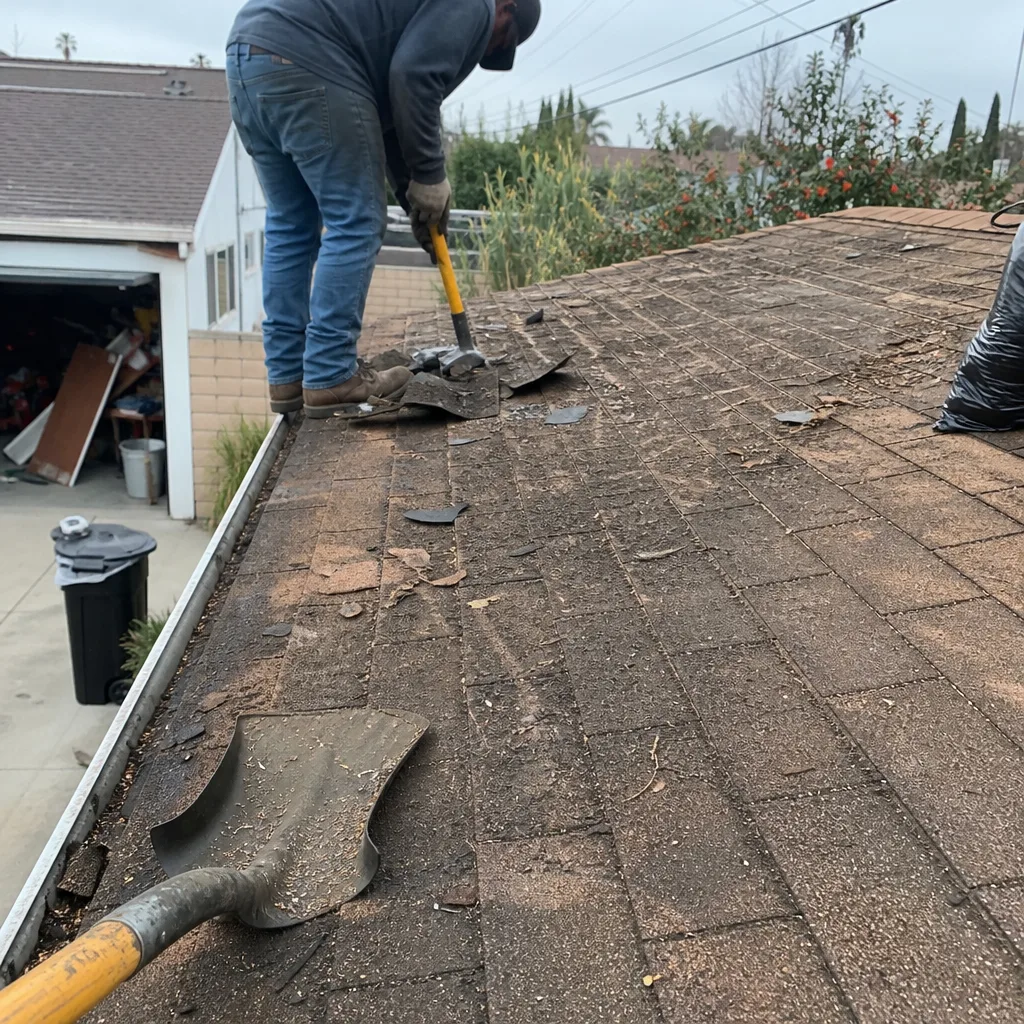 Before
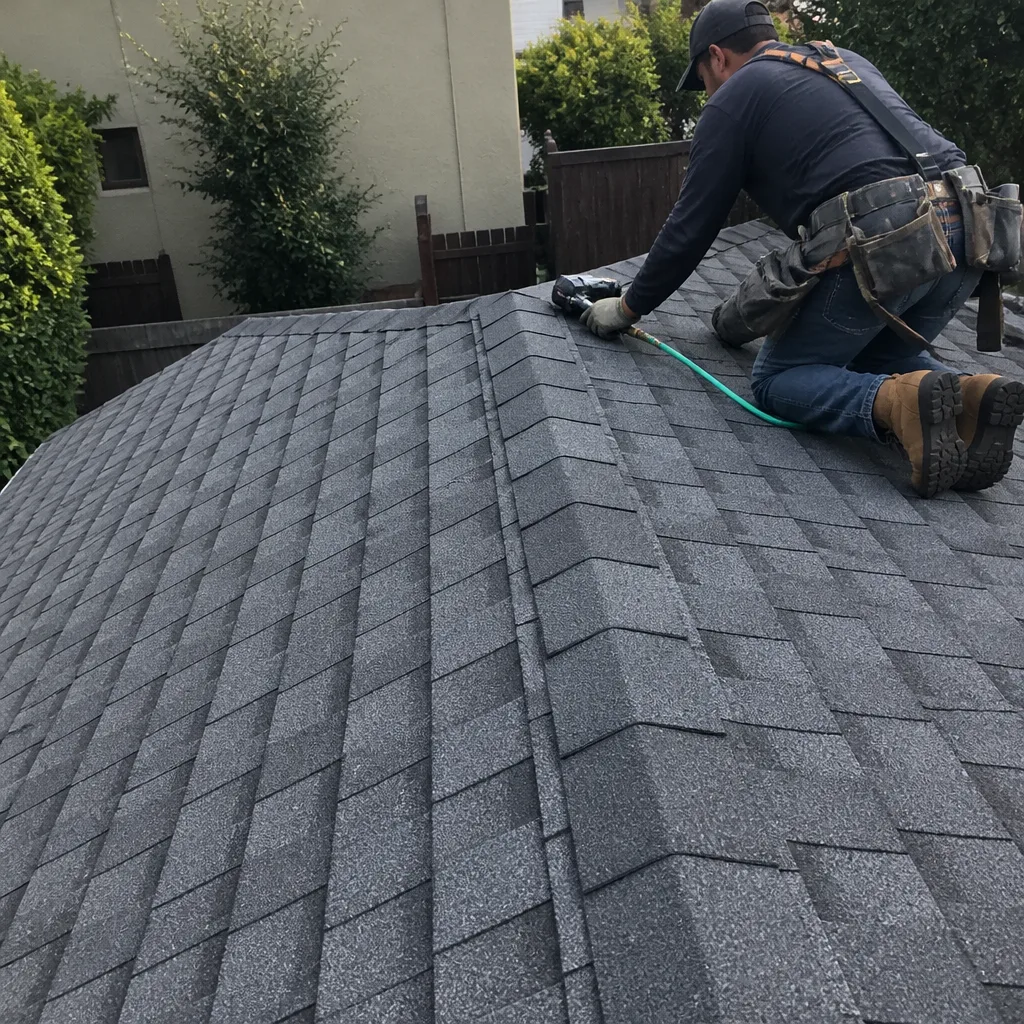 After
After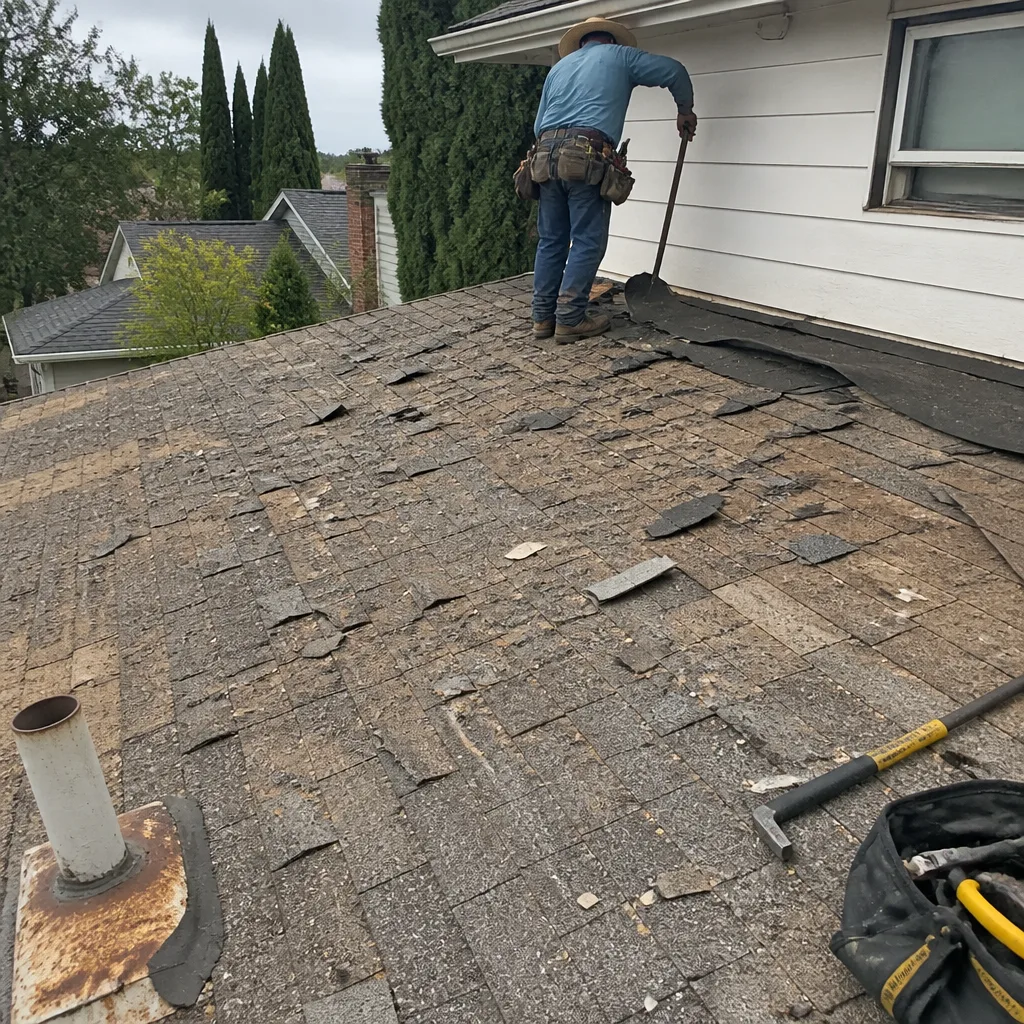 Before
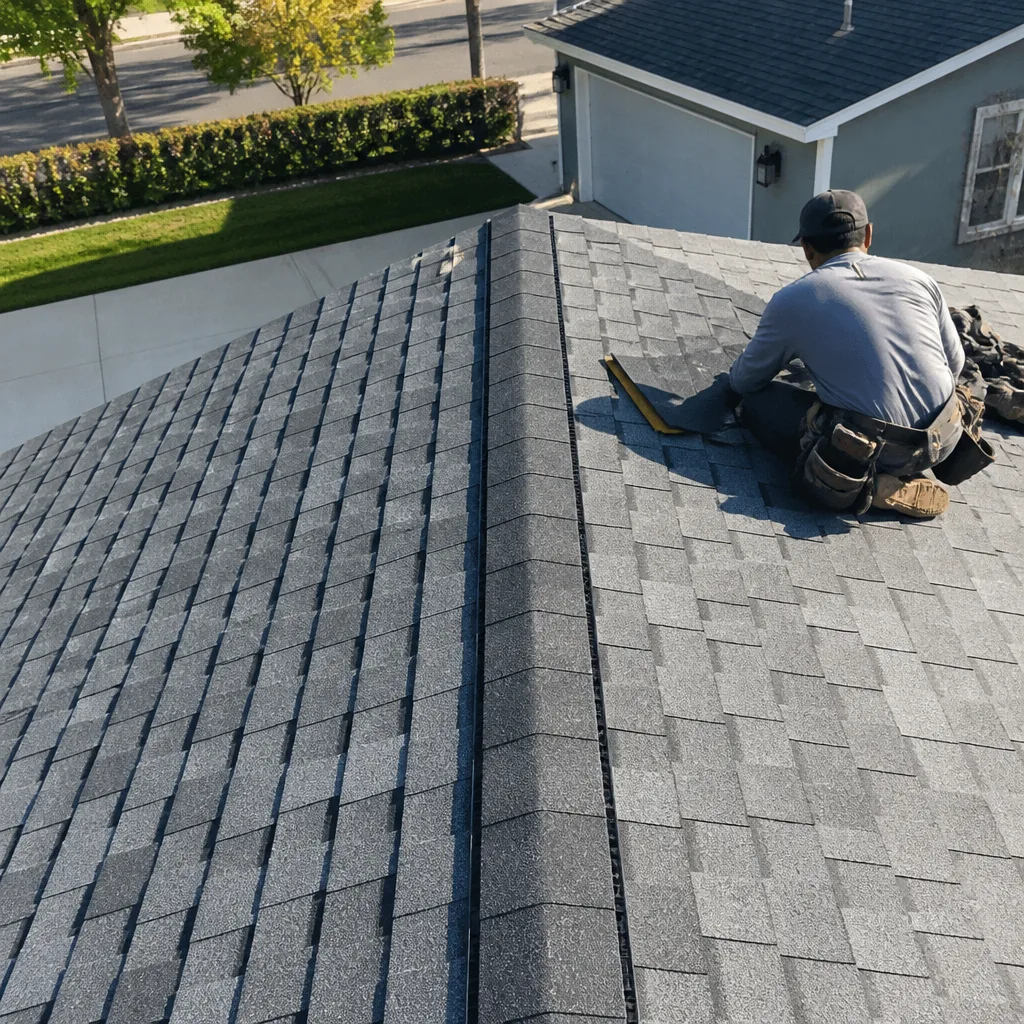 After
After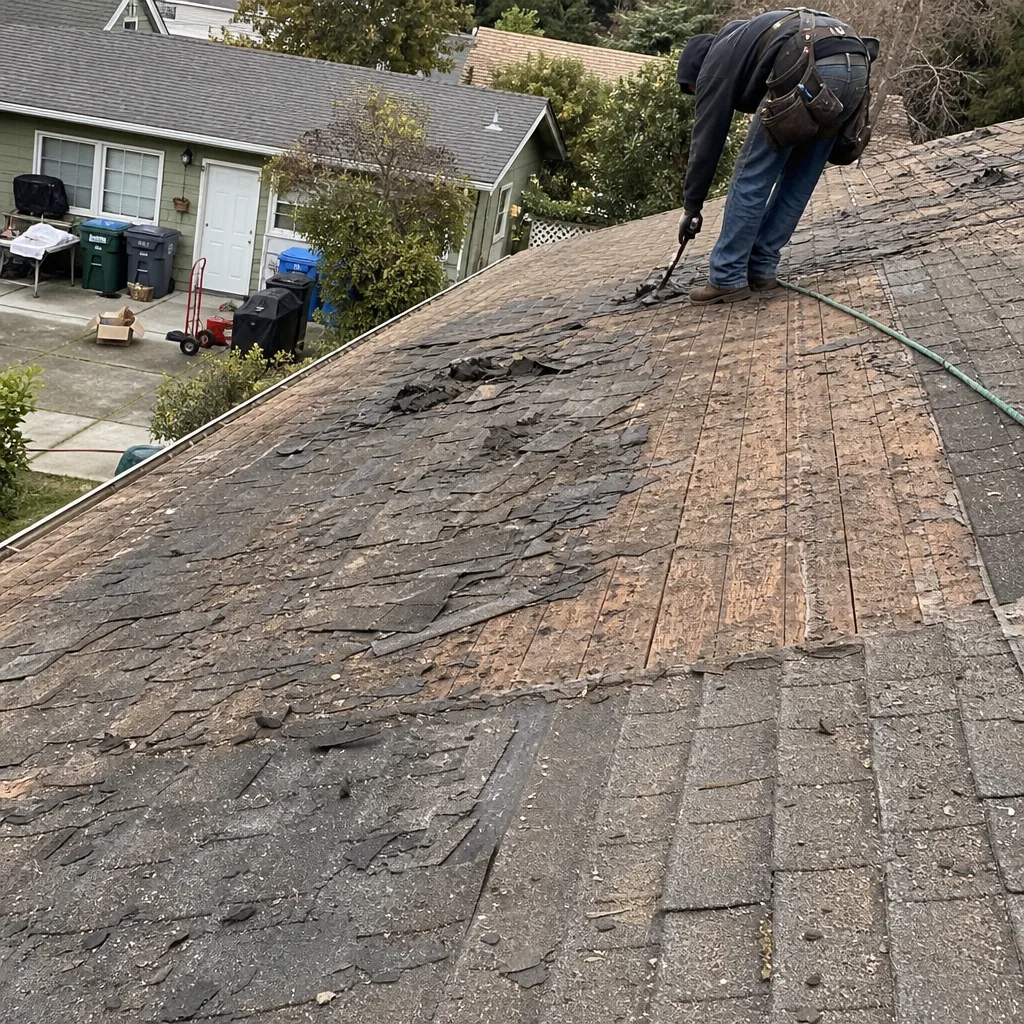 Before
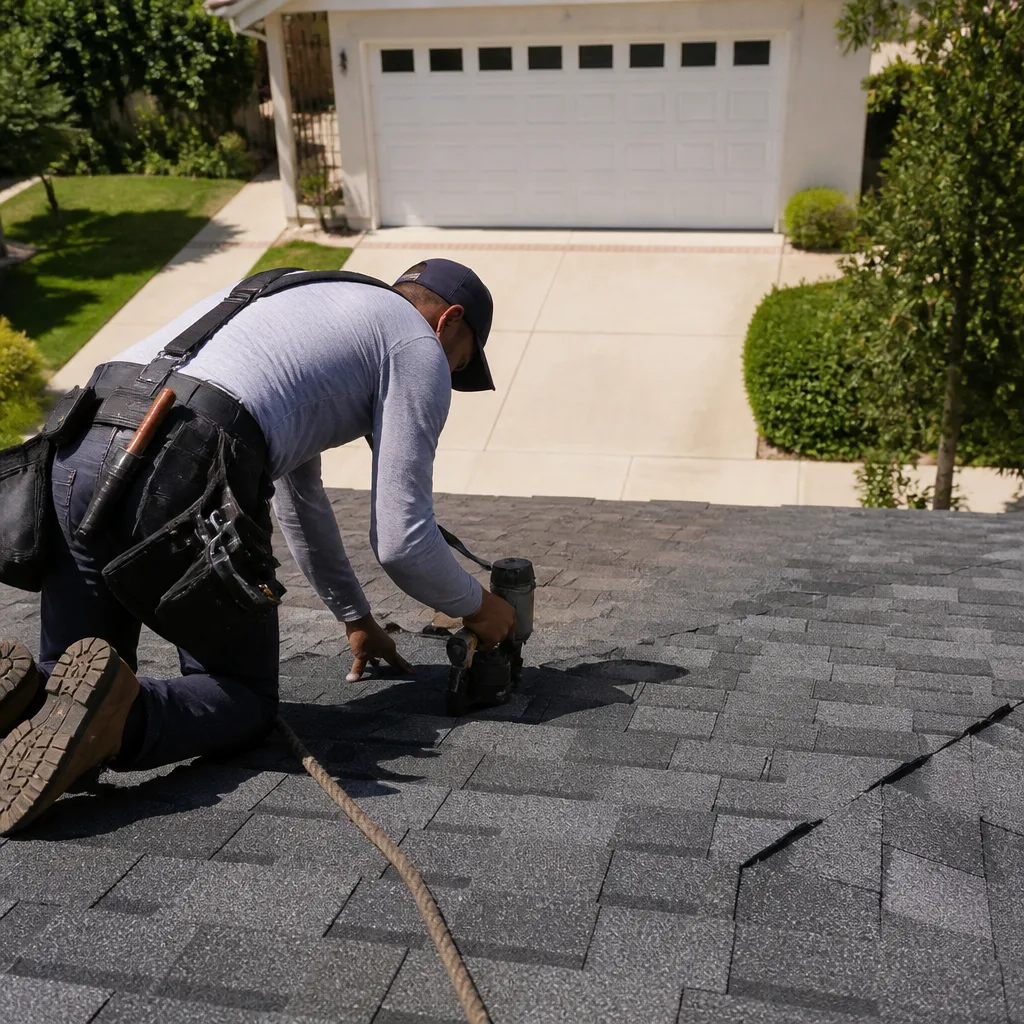 After
AfterWhen to Call a Professional
Some roofing issues are obvious: water staining your ceiling, missing shingles after a windstorm, granules filling your gutters every time it rains. Other signs are quieter: a musty attic smell that comes and goes, higher cooling bills through a Pasadena summer, or tile fragments in your yard after a Santa Ana event. If you see any of these, a professional inspection is the next step. Roof work is dangerous. Pasadena’s hot roofs, steep pitches on hillside homes, and older structures with fragile decking make DIY repairs a bad bet. Falls remain the leading cause of roofing fatalities, and a broken tile edge at the eave often hides structural damage underneath. Crestview Roofing Co Pasadena offers free estimates in Pasadena – call (626) 389-1956 to schedule one. We’ll tell you what is actually wrong, what it costs to fix, and what can wait.
Frequently Asked Questions
A new composition shingle roof in Pasadena typically runs $18,000 to $32,000 for a 1,500-square-foot home, while a clay tile roof starts around $38,000 and can exceed $65,000 on a large or steep home. The price depends on roof complexity, material choice, decking condition, and whether your property falls within a historic district with additional review requirements. Call (626) 389-1956 for an exact quote – estimates are free.
Yes, Pasadena requires a city-issued permit for roof replacement and for most repairs beyond a small square-footage threshold. The permit ensures your roof meets current California Building Code and Pasadena’s fire safety standards, and the final inspection documents that the work passed.
Clay tile and composition shingles both perform well in Pasadena’s climate when installed correctly. Clay tile handles heat and fire exposure best and lasts 50 to 75 years, but it is expensive and heavy. Composition shingles are affordable, fire-rated, and last 18 to 25 years locally. Concrete tile splits the difference. Flat roofs work only with proper slope correction and drainage.
Check your address on the City of Pasadena Planning Department’s online map portal with the overlay zones layer toggled on. If your property shows a designation like Bungalow Heaven or West Polytechnic, download the district’s design guidelines to see the approved roofing materials and color ranges before you get quotes.
California law allows homeowners to act as their own contractor on their primary residence, but we strongly advise against it. Roof work is genuinely dangerous, and a poorly installed Pasadena roof will leak, fail inspection, and may void material warranties. Hire a licensed C-39 roofing contractor with workers’ compensation coverage.
The 365-Day Done Right Promise covers any Crestview Roofing Co Pasadena repair for a full year after installation. If a covered repair fails within 365 days, we correct it at no charge, including a free second visit. Every repair includes this guarantee in writing at no extra cost.
The Bottom Line
Pasadena roofing is not a one-material-fits-all situation. Your street, your home’s era, and your property’s historic overlay status determine what is actually allowed and what will last. Do the 15-minute historic check, pull your permit history, and demand a written, itemized quote. The difference between a roof chosen on a verbal guess and one chosen with documentation is roughly the difference between a $22,000 project and a $29,000 argument. For transparent pricing, live arrival tracking, and written guarantees on every job, Roof Installation in Pasadena begins with a phone call to (626) 389-1956.
Written by Dylan Pace, Owner at Crestview Roofing Co Pasadena, serving Pasadena since 2000.